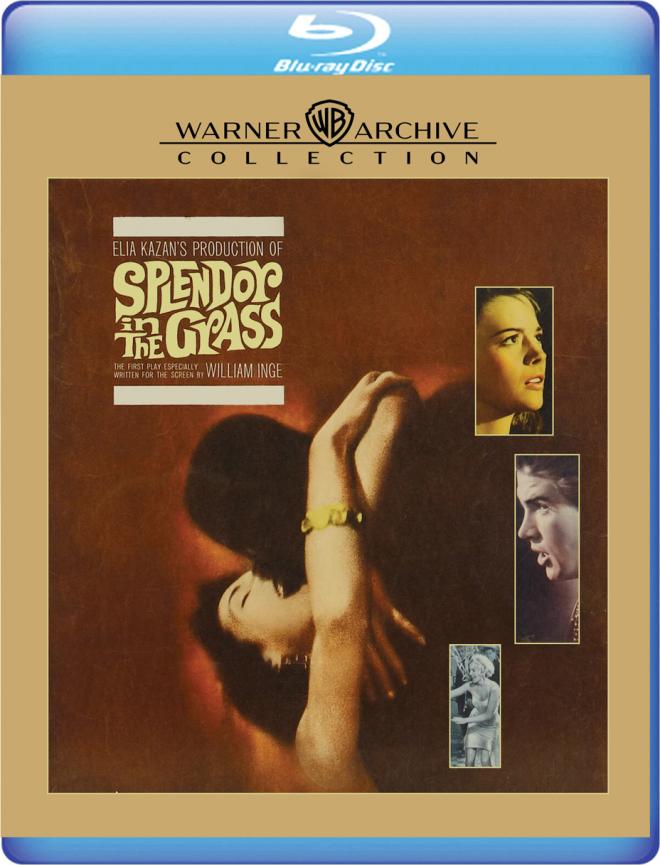
Splendor in the Grass - Warner Archive Collection
One of Hollywood's rawest examinations of teen love and psychological despair, Splendor in the Grass remains a moving and at times disturbing film. Strong direction from Elia Kazan, a lyrical script by William Inge, and the searing performances of Natalie Wood and Warren Beatty elevate this shattering study of a turbulent time. A marvelous transfer struck from a new 4K scan of the original camera negative and remastered audio enhance the impact of this memorable film. Highly Recommended.
Storyline: Our Reviewer's Take
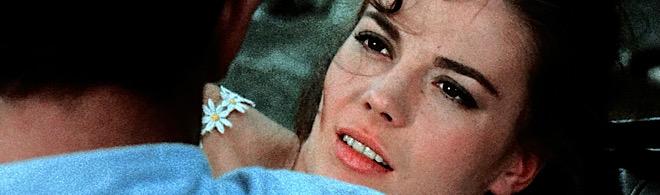
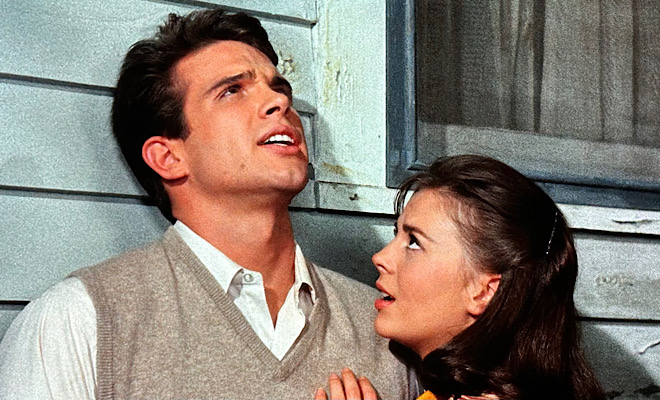
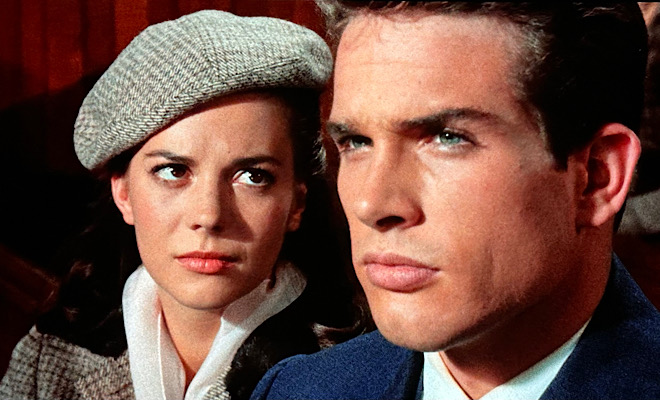
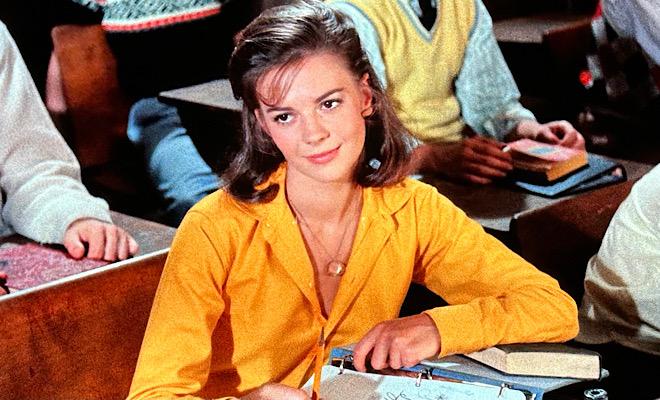
First love. Parental pressure and oppression. The moral decay of the 1920s. All these powerful forces converge in Splendor in the Grass, a compelling and occasionally overwrought film that depicts teen angst, sexual awakening, rebellion, and romantic longing with surprising frankness. Playwright William Inge won an Oscar for his original screenplay that pushes buttons and boundaries as it chronicles a turbulent year in a rural Kansas town and the combustible relationship between high school sweethearts Wilma Dean Loomis (Natalie Wood) and Bud Stamper (Warren Beatty).
Bud and "Deanie" come from opposite sides of the tracks. The Stamper family owns a successful oil drilling company and Bud's the heir apparent. His overbearing dad (Pat Hingle) has big plans for his golden-boy son, whose matinee idol looks, athletic prowess, and mature demeanor make him the envy of his male peers and an object of feminine desire. Bud, though, doesn't want to go to Yale and has no interest in working in the oil business. He'd rather marry Deanie, go to agricultural school, run his father's small ranch, and live a quiet, simple life, but the intense pressure his father inflicts upon him, coupled with the raging sexual energy that Deanie won't allow him to release, sends Bud hurtling toward the breaking point.
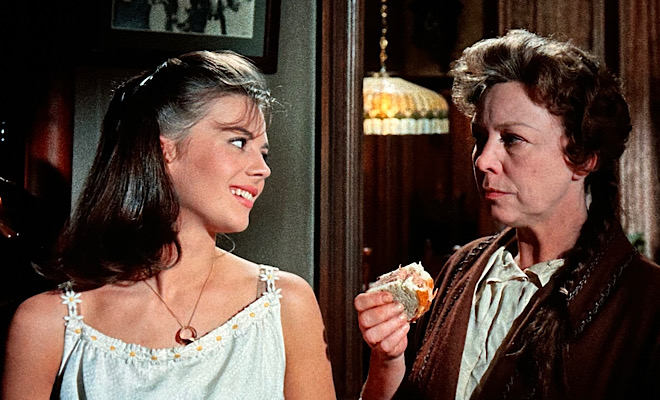
Deanie hails from a much more modest background, but less money doesn't mean fewer problems. She must endure constant harangues from her domineering mother (Audrey Christie) about the virtues of virginity and the importance of remaining "unspoiled," especially if she wants to marry Bud...and raise her family's social standing, which is her mother's top concern. Deanie struggles to resist Bud's more overt advances because she welcomes them. She wants to give herself to him completely, but trying to please Bud without submission and placate her strait-laced parents causes undue stress and more than a little confusion about the nature of love. When Bud can no longer accept being kept at bay, he takes his dad's advice and relieves his sexual frustration with another girl. That betrayal sends Deanie off the deep end, and her complete mental collapse, combined with the 1929 stock market collapse, sets in motion a string of devastating events.
The film draws its title from a William Wordsworth poem: "Though nothing can bring back the hour of splendour in the grass, we will grieve not, rather find strength in what remains behind." It's a lovely quote that resonates strongly, and Inge constructs a relatable narrative around it. The raw emotional displays can be tough to watch, and at times, I felt the characters went too far and reacted too wildly to various stimuli. Then I remembered almost every experience in adolescence is over the top and melodramatic, with seeming end-of-the-world consequences, and Splendor in the Grass incisively captures the intense, extreme, irrational feelings and impulsive, misguided actions of those on the cusp of adulthood.
It's fascinating to watch Deanie and Bud evolve and mature, crumble and fight back during an era of excess, transition, and confusion. Some might claim the villains of Splendor in the Grass are the parents who try to live through their children and saddle them with their own unrealized dreams, but society is an equally nefarious culprit, condemning certain behaviors, suppressing individuality, and pressuring parents and kids to follow its rigid rules or risk being ostracized. That's enough to send anyone over the edge, not to mention vulnerable, impressionable teens trying desperately to fit in while still figuring out who they really are.
Inge, who also wrote Come Back, Little Sheba, Bus Stop, Picnic, and The Dark at the Top of the Stairs, based the story on his own small-town experiences. He also acts in the film, playing the minor role of a country pastor. Director Elia Kazan, who specialized in white-hot interpersonal dramas, brings his A Streetcar Named Desire vigor to the small-town tale, emphasizing the stifling claustrophobia of the cramped community and ramifications of the judgmental, closed-minded attitudes that permeate it. Bud's wild-child older sister Ginny (Barbara Loden) is determined to get out at any cost and her brazen rebellion strikingly contrasts with the repression that suffocates everyone else.
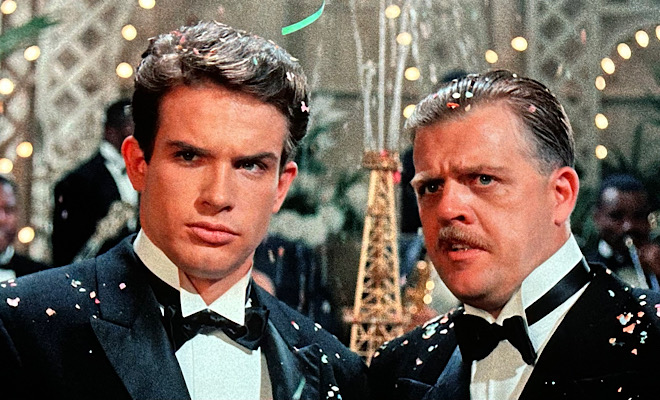
Though Wood had been a star since childhood and was in the midst of successfully transitioning to adult roles, Splendor in the Grass provided her with her juiciest part to date, and her uninhibited, achingly vulnerable performance earned her a well-deserved Best Actress Oscar nomination. (She lost to Sophia Loren in Two Women.) Beatty, in his film debut, is equally good and incredibly magnetic, bringing a Brando-like man-child fervor to Bud that makes him just as sympathetic a figure as Deanie. Their combustible chemistry fuels their passionate on-screen romance, and though the two would have a well-publicized affair a few years later, they reportedly didn't get along very well while filming Splendor in the Grass. (Apparently, no one particularly cared for Beatty during the movie's production.)
Aside from Hingle, whose spirited, blustery turn as Bud's father recalls Burl Ives' Big Daddy in Cat on a Hot Tin Roof, most of the supporting cast is largely unknown today, but all the actors file natural, affecting performances. Also making their film debuts in small roles are Sandy Dennis (who would win a Best Supporting Actress Oscar a mere five years later for Who''s Afraid of Virginia Woolf?) as one of Deanie and Bud's classmates and the inimitable Phyllis Diller, who portrays a flamboyant, Roaring '20s nightclub proprietress.
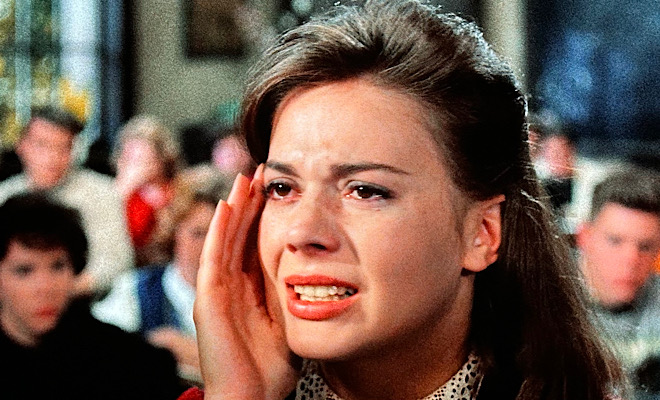
Splendor in the Grass may exude a nostalgic aura, but its themes are timeless. Growing up is never easy, and the movie reminds us it was always that way. The classic final scene is especially moving, producing a gamut of emotions from melancholy and regret to closure and optimism. Adolescent dreams rarely come true, but if we can survive the barrage of painful experiences during those agonizing formative years, we gain strength and resilience, just like the wise Wordsworth wrote. Kazan and Inge translate his poetry into an often poetic film that's well worth revisiting during different stages of our lives.
Vital Disc Stats: The Blu-ray
Splendor in the Grass arrives on Blu-ray packaged in a standard case. Video codec is 1080p/AVC MPEG-4 and audio is DTs-HD Master Audio 2.0 mono. Once the disc is inserted into the player, the static menu without music immediately pops up; no previews or promos precede it.
Video Review

A brand new HD master struck from a 4K scan of the original camera negative generates a dynamite 1080p/AVC MPEG-4 transfer that heightens the intimacy and emotional power of this stirring drama. The texture in the background of the opening credits accentuates the film grain, resulting in a noisy look, but once that sequence concludes and the narrative begins, the picture improves immeasurably. Just enough grain remains to preserve the feel of film and allow us to fully appreciate the lush cinematography of Boris Kaufman, who won an Oscar several years earlier for another Kazan movie, On the Waterfront. Excellent clarity and contrast produce a vibrant picture that exhibits a fair amount of depth, but it's the color that really amps up the impact of this presentation. The bold reds of the church carpet, the girls' sweaters, and Deanie's party dress make a statement, while the verdant greens of the countryside (though the film is set in Kansas, it was shot in New York) supply a fertile lushness. Pastels are nicely rendered, too, and patterns in decor and costumes are well defined.
Blacks are deep and rich, the all-white dress and hat Deanie wears in the final scene looks bright and crisp, and flesh tones appear natural and remain stable throughout. Shadow delineation is quite good, crush is largely absent, and sharp close-ups showcase the freckles that dot Wood's olive complexion, Beatty's piercing gaze, and the wrinkles and mustaches on the elders' careworn faces. A few shots look a bit soft, but they don't detract from what is otherwise a clean, elegant transfer. I don't own the 2009 DVD, but the issues of print damage and especially DNR that reportedly plagued that release are nowhere to be found here. This transfer puts the splendor in Splendor in the Grass, and fans of the film shouldn't hesitate to upgrade.
Audio Review

The DTS-HD Master Audio 2.0 mono track outputs strong audio that occasionally seems to exhibit a touch of separation across the front channels. Sonic accents like fisticuffs and cascading waterfalls are distinct, while subtleties like buzzing crickets and ticking clocks supply essential atmosphere. A wide dynamic scale gives David Amram's music score plenty of room to breathe and most of the dialogue is easy to comprehend. (During party sequences, the ambient noise of revelers and jazz bands drowns out a couple of lines here and there.) No distortion creeps into the mix and any age-related hiss, pops, or crackle have been scrubbed away.
Special Features
An absorbing Elia Kazan documentary and the film's original trailer comprise the disc supplements.
- Documentary: Elia Kazan: A Director's Journey (SD, 76 minutes)
Also included on Warner Home Video's 2012 A Streetcar Named Desire Blu-ray, this 1995 feature-length profile of the acclaimed director who is "a Greek by blood, a Turk by birth, and an American because my uncle made a journey" is told almost exclusively from Kazan's point of view. Therein lies its beauty and also a fundamental deficiency. Kazan notoriously named names during the House Un-American Activities Committee hearings during the early 1950s and consequently became the subject of much consternation and disgrace because of his cooperation with the panel. The fact that the names were already well known to the committee and Kazan merely corroborated their leftist leanings wasn't the point; it was the principle of the matter, and Kazan's self-serving actions cost him the respect of many of his peers. This whole incident, one of the most defining of Kazan's life, is glossed over in less than a minute, which is a severe failing of this otherwise probing and fascinating piece. Yes, this documentary is a celebration of Kazan the artist, not an examination of Kazan's character, but such a monumental episode deserves at least as much exploration as the director's early life and influences, and we just don't get that here. What we do get are extended explorations of most of Kazan's movies, including A Streetcar Named Desire, A Tree Grows in Brooklyn, Gentlemen's Agreement, Panic in the City, Viva Zapata, Baby Doll, A Face in the Crowd, Wild River, and America, America, along with Kazan's perspective on how he helped bring naturalism and realism to Hollywood, his ability to extract raw performances from his actors, and his attraction to stories with taboo themes. Despite its notable holes, this is essential viewing for fans of Kazan, of whom I am unabashedly one, and those interested in film history and production. - Theatrical Trailer (SD, 4 minutes) - The movie's original preview rounds out the disc supplements.
Final Thoughts
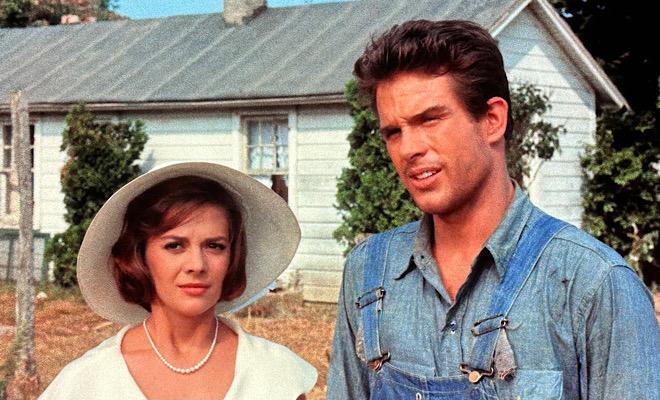
Some histrionics notwithstanding, Splendor in the Grass still packs a punch almost 65 years after its premiere, thanks to Kazan's bold direction, Inge's layered, substantive script, and the magnetic performances of Wood and Beatty. The film's relatable themes will surely spark some spirited discussion, but there's no debating the high quality of Warner Archive's Blu-ray presentation, which features a top-notch transfer struck from a new 4K scan of the original camera negative and remastered audio. A fascinating Kazan documentary caps off this splendid disc that's well worth an upgrade. Highly Recommended.
-
 Grab The Glasses - The Turbine Collector Series Grows with Three More Blu-Ray 3D Discs!By:
 -
 Closing Out 2024 and Welcoming 2025 - HDD's 4K UHD & Blu-ray Shopping Guide, Week of Dec. 31, 2024By:
 -
 Holiday Greetings - HDD's 4K UHD & Blu-ray Shopping Guide, Weeks of Dec. 17 & Dec. 24, 2024By:
 -
 Santa Comes Early This Year! Turbine Delivering 'Bumblebee' 'Transformers: Rise of the Beasts' & 'Sing 2' to 3D Blu-ray on December 19thBy: