Rhapsody in Blue - Warner Archive Collection
The life story of George Gershwin is lavishly told in Rhapsody in Blue, arguably the best songwriter biopic of Hollywood's Golden Age. Robert Alda (Alan's dad) plays the legendary composer, but it's Gershwin's music that's the real star of this highly entertaining film that's been reverentially restored and reconstructed by Warner Archive. Highly Recommended.
Storyline: Our Reviewer's Take

Songwriter biopics were a big thing back in the 1940s and '50s. Movies honoring such musical giants as Cole Porter, Jerome Kern, George M. Cohan, Richard Rodgers and Lorenz Hart, and Sigmund Romberg earned millions at the box office, but if truth be told, most of them weren't very good. That's because the composers' lives were either too boring or too risqué to dramatize truthfully, and the stories concocted by the screenwriters couldn't compete with both the jukebox of hit tunes and glamorous guest stars who performed them.
Rhapsody in Blue is a rare exception. One of the first songwriter biopics, this beautifully mounted ode to George Gershwin and his vast contributions to American music is also arguably the best. Gershwin's story isn't particularly dramatic until his sudden and tragic death at age 38 from a brain tumor, but it rings true by largely concentrating on Gershwin's genius and maniacal dedication to his craft. Thankfully, embellishments are few. Yes, there's a manufactured romance, but it's handled tastefully and helps hammer home the point that music was Gershwin's first and most passionate love, and no woman could ever distract him from taking it down new and exciting paths.
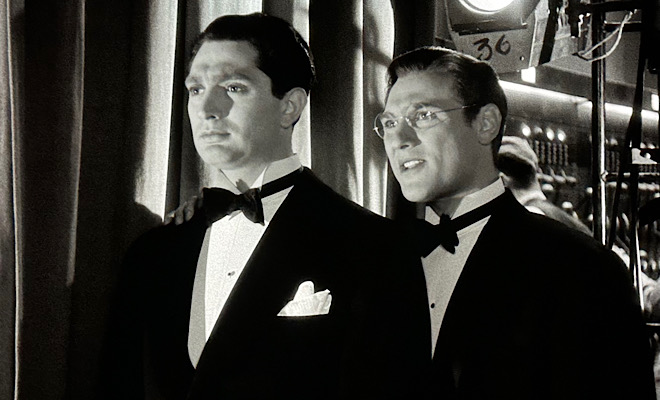
Directed with artistry, reverence, and a keen sense of import by Irving Rapper (best known for helming the classic Bette Davis weepie Now, Voyager), the film chronicles Gershwin's meteoric rise from a humble New York City tenement kid to a boy-wonder songwriter who both pushes boundaries and breaks established musical rules. He pens his first hit, the immortal "Swanee," at the tender age of 21, and a mere five years later wows the critics and public with his jazz-infused orchestral piece "Rhapsody in Blue," which cements his reputation as America's premier composer. Equally adept at writing scores for Broadway musicals and major symphonic works, Gershwin toils relentlessly, churning out a steady stream of material, almost as if he knows his time on Earth is limited.
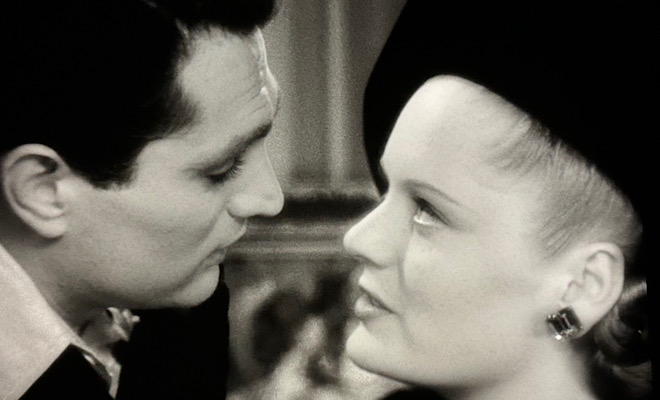
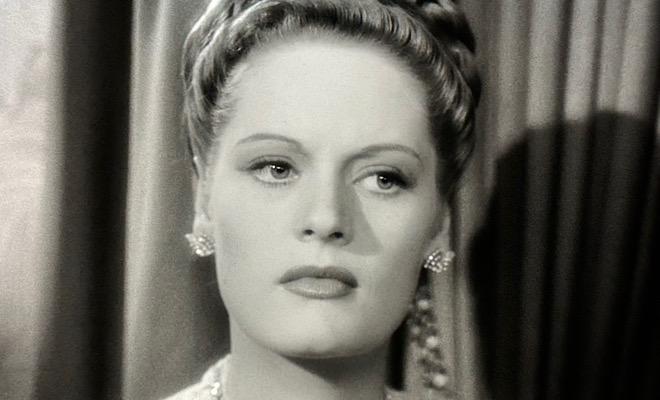
Rhapsody in Blue paints a highly respectful portrait of Gershwin, but doesn't shy away from addressing some of his faults. The screenplay by Howard Koch (Casablanca) and Elliot Paul (with an uncredited assist from playwright Clifford Odets) examines how genius can be both a blessing and a curse, bringing Gershwin (Robert Alda) immense wealth and renown while at the same time torturing his psyche and hampering his relationships. We catch glimpses of Gershwin's ego and conceit, as well as his lack of emotional intelligence in his dealings with Julie Adams (Joan Leslie), a Broadway actress who holds a blazing torch for him throughout the film, and Christine Gilbert (Alexis Smith), an expatriate socialite and divorcee who also falls under his spell.
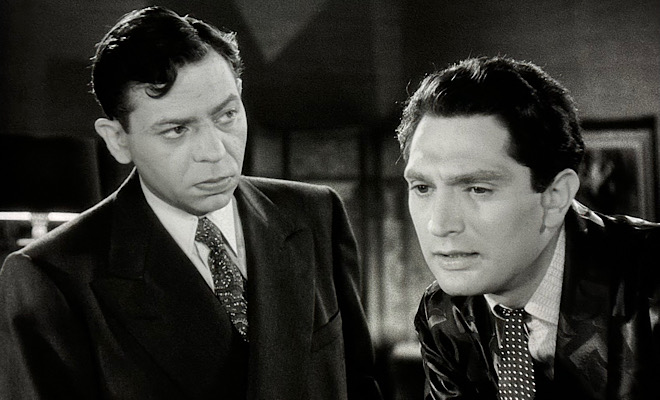
Unlike other songwriter biopics, Rhapsody in Blue's lineup of guest stars isn't particularly lofty, which might explain the film's failure to capture the fancy of subsequent generations. The talent on display is still top-notch, but the filmmakers favor authenticity over Hollywood glamor. Al Jolson, who introduced "Swanee" in 1919 and made it a hit, is the most recognizable name, and he rousingly recreates his "Swanee" performance (albeit in blackface, which was a common performance practice at the time). Oscar Levant, who was Gershwin's best friend in real life, plays his best friend on film as well, delivering both his trademark acerbic wisecracks and virtuoso piano-playing. (Though Alda tinkles the ivories on camera, the actual performances are Levant's.)
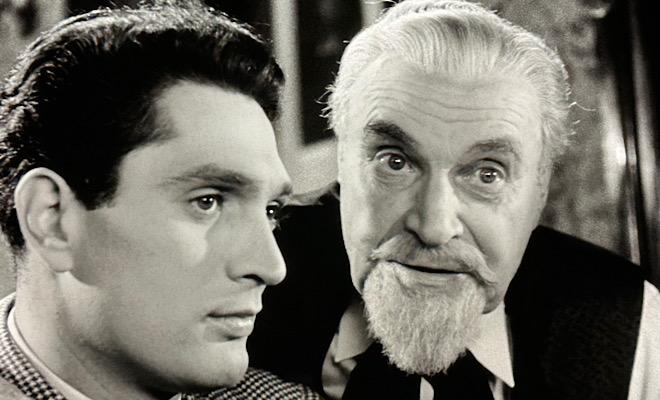
Bandleader Paul Whiteman, who commissioned "Rhapsody in Blue" and conducted its premiere performance, handles the same duties here, while Anne Brown, Broadway's original Bess in Porgy and Bess, sings an electrifying version of "Summertime." Jazz vocalist/pianist Hazel Scott is also on hand to sing "The Man I Love" and "I Got Rhythm" in a glitzy Paris nightclub setting, and such marvelous character actors as Charles Coburn (as impresario Max Dreyfus), Morris Carnovsky (as Gershwin's father), Albert Bassermann (as Gershwin's teacher and mentor), and Rosemary DeCamp (who at age 33 plays Gershwin's mother) round out the stellar cast.
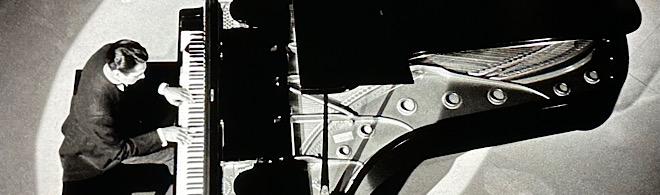
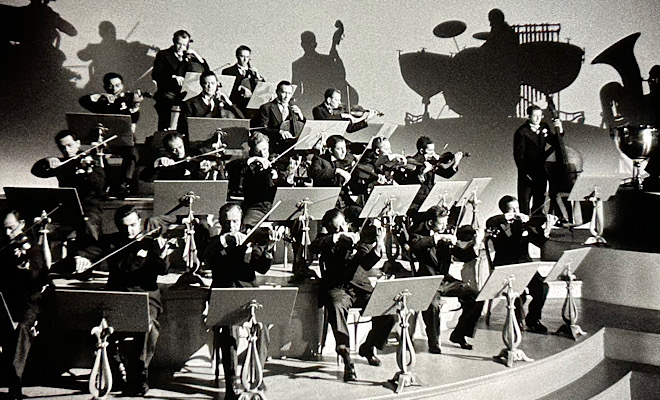
Plenty of classic Gershwin tunes are sprinkled throughout (the list of those that didn't make the cut is voluminous as well), but Rhapsody in Blue deserves special commendation for the special attention it pays to Gershwin's orchestral works. A huge chunk of "Rhapsody in Blue" is performed, but it's filmed with such creativity and elan the interlude doesn't slow down the narrative in the least. (I wish Warner Bros had the guts to include the entire composition.) Understandably, much smaller sections of "An American in Paris" and "Concerto in F" are featured, but at least they're there.
This edition of Rhapsody in Blue also restores 12 minutes of footage that was cut sometime between the end of production and the picture's theatrical premiere almost two years later. (Warner Bros held the movie until the end of World War II to ensure its profitability.) Most of the deleted bits don't add much to the narrative, but the restoration of the complete version of "Summertime" allows us to fully appreciate the song's lyrical beauty and Brown's heartfelt rendition. Like the DVD, this Blu-ray also includes a 10-minute overture that was only heard at the New York and L.A. premieres.
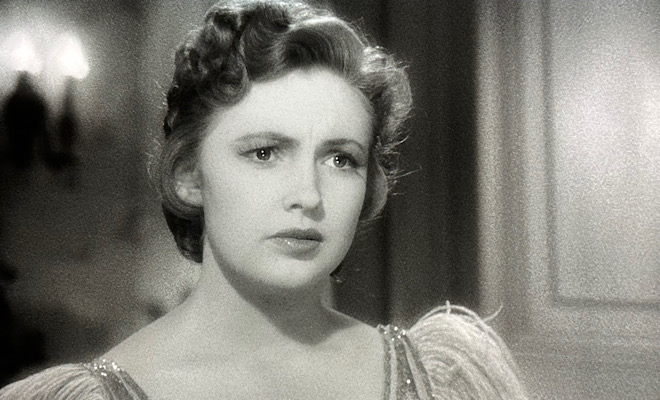
Rhapsody in Blue runs a whopping 161 minutes, but the music is so intoxicating, the portrayals are so good, and the production design is so impeccable, the time flies by. Alda embodies Gershwin well (his piano miming is quite impressive), Leslie brings her usual fresh-faced sincerity to her role, and Smith provides an aloof elegance tinged with melancholy and a welcome dose of breathtaking beauty.
So many songwriter biopics are sugar-coated tunefests that lack substance. Rhapsody in Blue treats the music and the man seriously, yet still delivers solid entertainment. It may not be well known today, but it's exceedingly well done, and this important and often dazzling restoration will preserve this underrated film for generations to come.
Vital Disc Stats: The Blu-ray
Rhapsody in Blue arrives on Blu-ray packaged in a standard case. Video codec is 1080p/AVC MPEG-4 and audio is DTS-HD Master Audio 2.0 mono. Once the disc is inserted into the player, the static menu with music immediately pops up; no previews or promos precede it.
Video Review
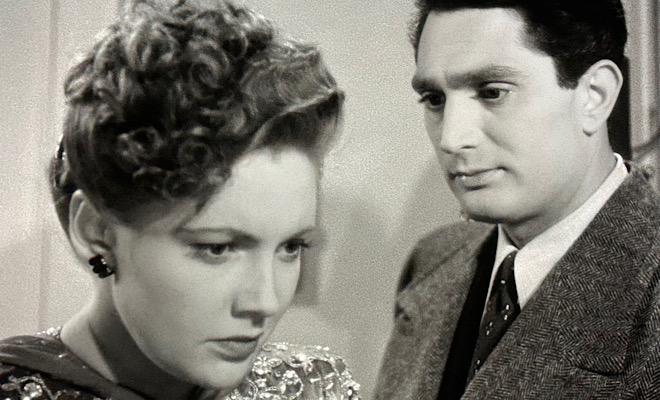
This visually arresting presentation of Rhapsody in Blue is the result of both a painstaking, frame-by-frame restoration and partial reconstruction of the film. Once again, Warner Archive hits the proverbial ball out of the park with another spectacular 1080p/AVC MPEG-4 transfer that's struck from the original nitrate negative of the final release version of Rhapsody in Blue and a composite fine grain of an early version of the movie that contains the 12 minutes of deleted footage. The seamless merging of these two sources is a joy to behold and allows us to see Rhapsody in Blue as it was originally intended.
Faint grain lends the image a film-like look, while superior clarity and contrast enhance depth and highlight the fine details of background elements and costume patterns and textures. Inky blacks and crisp whites combine with a healthy grayscale to produce a stunning picture that showcases the lush cinematography of three-time Oscar nominee Sol Polito. (The concert sequences are especially impressive.) Shadow delineation is superb, sharp close-ups flatter the actors, and no dirt, nicks, or scratches sully the pristine print. I don't own the 2006 DVD, but this gorgeous restoration and reconstruction surely makes that disc obsolete.
Audio Review
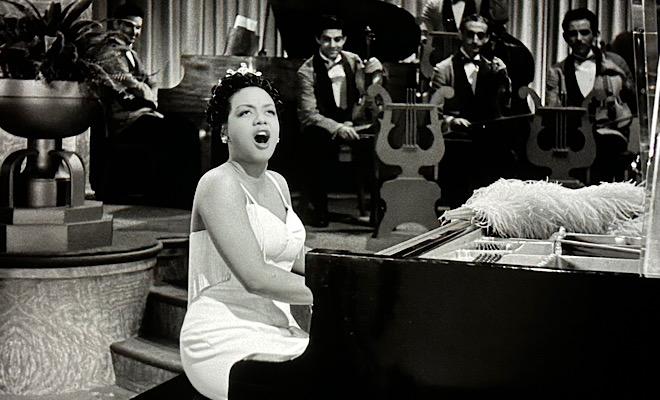
The DTS-HD Master Audio 2.0 mono track outputs incredibly vibrant, rich sound that brings Gershwin's iconic compositions - especially his orchestral pieces - to brilliant life. Rhapsody in Blue received Oscar nominations for Best Sound (Nathan Levinson) and Best Scoring of a Musical Picture (shared by Ray Heindorf and Max Steiner) and this robust track shows us why. Top-notch fidelity and a lovely depth of tone distinguish the piano, clarinet, and violin solos in the "Rhapsody in Blue" sequence, while a strong smattering of bass bolsters the impact of percussion. Lush strings and bold brass benefit from a wide dynamic scale and all the vocals exude a satisfying fullness. A slight volume boost injects extra oomph into the musical numbers and all the dialogue and song lyrics are well prioritized and easy to comprehend. No distortion creeps into the mix and any age-related hiss, pops, or crackle have been erased. Warner Archive always lavishes plenty of attention on the audio tracks of its musicals, but the care taken with this one is especially evident and much appreciated.
Special Features
The film's original theatrical trailer is the only extra on the disc.
Final Thoughts
If you love the music of George Gershwin, you will love Rhapsody in Blue. And if you're unfamiliar with Gershwin's songs and orchestral compositions, this captivating biopic will show you why Gershwin remains one of the most popular and influential American composers of all time. Warner Archive's meticulous restoration and reconstruction features a sublime new transfer struck from 4K scans of the original nitrate negative and a composite fine grain and robust remastered audio that heightens the impact of Gershwin's glorious music. Highly Recommended.
-
 Grab The Glasses - The Turbine Collector Series Grows with Three More Blu-Ray 3D Discs!By:
 -
 Closing Out 2024 and Welcoming 2025 - HDD's 4K UHD & Blu-ray Shopping Guide, Week of Dec. 31, 2024By:
 -
 Holiday Greetings - HDD's 4K UHD & Blu-ray Shopping Guide, Weeks of Dec. 17 & Dec. 24, 2024By:
 -
 Santa Comes Early This Year! Turbine Delivering 'Bumblebee' 'Transformers: Rise of the Beasts' & 'Sing 2' to 3D Blu-ray on December 19thBy: