-
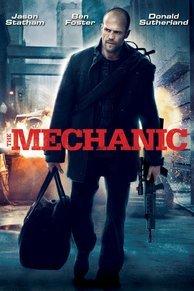 'The Mechanic' Blu-ray Announced and Detailed[teaser]Get ready for more intense hit man action on Blu-ray this May. [/teaser] In an early announcement to retailers, Sony says 'The Mechanic' will set his sights on Blu-ray on May 17. The crime thriller stars Jason Statham and Ben Foster and is a remake of the 1972 film directed by Michael Winner. The Blu-ray will feature 1080p video, a lossless soundtrack, and supplements will only include deleted scenes and MovieIQ. Suggested list price for the Blu-ray is $34.95. You can find the latest specs for 'The Mechanic' linked from our Blu-ray Release Schedule, where it's indexed under May 17.Posted Tue Mar 22, 2011 at 08:00 AM PDT by:
 -
 'No Strings Attached' Announced for Blu-ray[teaser]Natalie Portman will get kinky with Ashton Kutcher on Blu-ray in two months. [/teaser] In an early announcement to retailers, Paramount has revealed 'No Strings Attached' for a Blu-ray release on May 10. The Blu-ray of this raunchy romantic comedy directed by Ivan Reitman will offer a free 3-month premium subscription (valued at $179) at perfectmatch.com. Specs have yet to be revealed, but the release will be a Blu-ray/DVD combo pack and supplements will include: Commentary with director Ivan Reitman; Sex Friends: Getting Together; Inside the Sassy Halls of Secret High; Deleted scenes; Alternate storylines; and the Blu-ray exclusive Modern Love: The Do's and Don'ts. Suggested list price for the Blu-ray is still undetermined at this time. You can find the latest specs for 'No Strings Attached' linked from our Blu-ray Release Schedule, where it's indexed under May 10.Posted Tue Mar 22, 2011 at 06:00 AM PDT by:
 -
 What Went Wrong With The Tourist?!by Aaron Peck [teaser]The plan was foolproof, or so they thought. Get two of the biggest stars in the world, pair them in the same movie, and mix in some Hitchcockian action and intrigue. It will be like printing money. Right? So just how did 'The Tourist' go so wrong?[/teaser] Sometimes film critics give the general movie-going audience a bad wrap. Sure, fans run out and ogle the latest dreadfully awful 'Transformers' movie whenever they can, but even the folks who hang on Michael Bay's every slo-mo shot thought 'The Tourist' sucked. On the surface it seemed like the perfect idea. Johnny Depp is all kinds of famous. His portrayal of Jack Sparrow has sent him into the fame stratosphere. Based on popularity, if there's something above the A-list, that's where Depp now resides. As for Jolie, she's also become a worldwide phenomenon – and no that's not just because she's apparently trying to adopt a child from every country around the globe. She's a true movie star. She's got the looks (oh boy, has she got the looks) and the swagger to pull it off. After starring in the vastly underrated 'Salt' last year, it was easy to see that Jolie could pull off just about anything and make it look good. So, these two major stars got together for a movie featuring international intrigue, exotic locales, espionage, mistaken identities, what seemed like a good bit of action, a more than healthy $100 million budget, and a well regarded director at the helm. What could go wrong? After all, both of these stars are quite adept at headlining their own $100 million pictures and making back oodles of money for the studios. "I wonder what Geoffrey is doing right now? Heh... Barbossa." The problems with 'The Tourist' are obvious right from the moment Frank (Depp) and Elise (Jolie) first meet on a crowded train. Depp looks slightly pudgy and altogether bored out of his mind. Like he's just biding his time until he can start filming more 'Pirates' movies. Jolie is still sexy, but utterly disengaged, the chemistry isn't there at all. The two are seated miles apart from one another, but the apparent chasm feels even wider. "Man, Burton always has the best craft services. I miss those little cheese crackers." Without mincing words, the two stars act like they're merely there to collect paychecks, and that's it. There's never one bit of chemistry on display here. They might as well have filmed their scenes separately and been digitally inserted into the same shots, as there's no evidence of any sort of attraction or even interest in playing out the scenes as though playing off one another's physical actions and movements. Wax figures would have been more alluring. As the movie progresses, it, like Jolie, tries its hardest to stay ever-so aloof. Acting like it's smarter than it actually is. Like there's wit at work behind the action. But you'd need action for that to even be a possibility. In other words, nothing happens. At all. We have to watch as the two of them half-heartedly feign some sort of reluctant interest in each other, all the while hoping and praying that at some moment the story will finally break free and that $100 million budget will show its face on screen. Sadly, it never does. "What was that joke Keith was telling me at dinner last night? That wasn't the Queen, it was Jagger..." As you may have noticed, I haven't really discussed the plot here. That's because I'm pretty sure the filmmakers never discussed it either. If they did, they would have thought to themselves, 'This is literally going to bore viewers to tears, reducing them to limp, popcorn sprinkled lumps of despair and regret. Either that, or it's really gonna piss a few people off.' When the end comes you're hoping for some sort of redemption. Something that will make everything worthwhile, a clever twist, a witty payoff, you wait, and you wait, and then you realize that this hopeless production couldn't even get that right. This is one of the worst cop-out endings of last year, if not all time. It even gives this year's 'The Adjustment Bureau' a run for its money in the category of Most Ludicrous Ending. "Sigh... Marlon always said to take their money, but his Superman scenes only took a week." So, what went wrong with 'The Tourist'? Everything! Sony underestimated the American movie-going audience. They obviously believed that pairing these two mega-movie stars would easily bring in the big box office bucks they were seeking. Where that $100 million actually went is a whole other question, as the biggest action in the movie appears to involved Depp jumping on a fruit cart, and Jolie dragging a boat through a canal for a few yards. That's it! What a painful, overlong, mind-bogglingly dull bore. Kudos to the public though! 'The Tourist' cost $100 million to make and only made back approximately $67 million domestically. Even though 'Transformers 3' will easily gross over $350 million bucks, the American public has announced that they do indeed know crap when they see it.Posted Mon Mar 21, 2011 at 02:15 PM PDT by:
 -
 'Drive Angry' Announced for Blu-ray and Blu-ray 3D[teaser]A furious Nicolas Cage puts the pedal to the metal in high-def and the third dimension this May. [/teaser] In an early announcement to retailers, Summit Entertainment will be revving up 'Drive Angry' for high-definition on May 31. 'Drive Angry - 3D' will also be available on the same date. Cage stars as a vengeful father who escapes from Hell to hunt down the men that kidnapped and murdered his daughter. Specs have yet to be detailed, but supplements will include: Access: Drive Angry –activate dynamic "scene specific" features including interviews with cast and filmmakers, track the body count in Milton's Mayhem, and more; Audio Commentary with Filmmakers Patrick Lussier and Todd Farmer; Deleted Scenes with Filmmaker Commentary. Suggested list price for the Blu-ray is $30.49 and the Blu-ray 3D is $34.99. You can find the latest specs for 'Drive Angry' and 'Drive Angry - 3D' linked from our Blu-ray Release Schedule, where they're indexed under May 31.Posted Mon Mar 21, 2011 at 12:45 PM PDT by:
 -
 'The Tempest' Announced for Blu-ray[teaser]Julie Taymor's 2010 adaptation of the Shakespeare play is planned for Blu-ray release this September. [/teaser] In an early announcement to retailers, Disney/Buena Vista says 'The Tempest' starring Helen Mirren, Felicity Jones, and Russell Brand will have a Blu-ray release on September 13. The movie had an estimated budget of $20,000,000 and received an Oscar a nomination for Best Achievement in Costume Design, as well as a Satellite Awards nomination for Best Actress in a Motion Picture Drama (Helen Mirren). Specs have yet to be revealed, but supplements will include: Audio Commentary with director Julie Taymor; Russell Brand rehearsal riff; and Music video: Reeve Carney, "O Mistress Mine." Suggested list price for the Blu-ray is $39.99. You can find the latest specs for 'The Tempest' linked from our Blu-ray Release Schedule, where it is indexed under September 13.Posted Mon Mar 21, 2011 at 12:00 PM PDT by:
 -
 'Legend: Ultimate Edition' Blu-ray Dated[teaser]Ridley Scott's 1985 cult fantasy-adventure that is more D&D themed than the actual 'Dungeons and Dragons' movie will bring the magic to Blu-ray in May. [/teaser] In an early announcement to retailers, Universal Studios is preparing 'Legend: Ultimate Edition' for a Blu-ray release on May 31. Tom Cruise stars as a mystical forest dweller, chosen by fate, to undertake a heroic quest. He must save the beautiful Princess Lily (Mia Sara) and defeat the demonic Lord of Darkness (Tim Curry) or the world will be plunged into a never-ending ice age! Specs and supplements have yet to be revealed, but suggested list price for the Blu-ray is $26.98. You can find the latest specs for 'Legend: Ultimate Edition' linked from our Blu-ray Release Schedule, where it is indexed under May 31.Posted Mon Mar 21, 2011 at 10:00 AM PDT by:
 -
 'Zombie Holocaust' Blu-ray Announced[teaser] The cult 1980s horror film will shamble to Blu-ray next month. [/teaser] In an early announcement to retailers, Shriek Show has listed 'Zombie Holocaust' for Blu-ray on April 19. In an effort to expose a flesh-eating cult in New York City, a team of scientists sets out on an expedition to the primitive island of Keto. They are soon trapped in the wilderness, surrounded by a tribe of murderous cannibals and an army of deadly zombies! Specs and supplements haven't been revealed yet, but the release will be a Blu-ray/DVD combo and suggested list price is $20.98. You can find the latest specs for 'Zombie Holocaust' linked from our Blu-ray Release Schedule, where it's indexed under April 19.Posted Mon Mar 21, 2011 at 08:00 AM PDT by:
 -
 'Butch Cassidy and the Sundance Kid' Blu-ray Digibook Double Dip Announced[teaser]Paul Newman and Robert Redford will be back on Blu-ray in digibook form this May. [/teaser] In an early announcement to retailers, 20th Century Fox has announced 'Butch Cassidy and the Sundance Kid' for Blu-ray re-release on May 10. After the horrible 2008 edition, here's hoping this is a remaster! Specs and supplements have yet to be detailed, but the release will likely just be a repackage in a digibook. Suggested list price for the Blu-ray is $34.99. You can find the latest specs for 'Butch Cassidy and the Sundance Kid' linked from our Blu-ray Release Schedule, where it's indexed under May 10.Posted Mon Mar 21, 2011 at 06:00 AM PDT by:
 -
 HDD Deal of the Week: 'The Mel Brooks Collection' Blu-ray $46.99 at Amazon[teaser]Amazon's latest week-long deal serves up nine classic comedies from the master of mockery on Blu-ray for over fifty percent off! [/teaser] Amazon is currently offering 'The Mel Brooks Collection' for $46.99 (53% off suggested list price). The deluxe box set includes: 'Blazing Saddles,' 'High Anxiety,' 'History of the World: Part 1,' 'Robin Hood: Men in Tights,' 'Silent Movie,' 'Spaceballs,' 'To Be or Not To Be,' 'Twelve Chairs,' and 'Young Frankenstein.' Click here to own this highly recommended release for one heck of a price!Posted Sun Mar 20, 2011 at 01:50 PM PDT by:
 -
 HD Advisor: 98 Degrees and RisingEditor's Note: Each Friday, High-Def Digest's own HD Advisor will answer a new round of questions from our readers. If you have home theater questions you need answered, send an email to [email protected]. If you've already sent a question and don't see it answered yet, please be patient as we work our way through them. To browse through previously answered questions, visit the main HD Advisor page. Answers by Joshua Zyber "Resume Play" Feature on Blu-ray Q: When the PS3 was first introduced as a Blu-ray player, a disc had to be restarted from the beginning every time the disc was stopped. Then, one of the first firmware upgrades to the PS3 brought the capability to automatically return to the spot where the disc had been stopped without re-starting. Unfortunately, not all discs utilize this feature. It seems like at least half of the BDs I watch restart by going back to the beginning. Why don't all discs work the same way? A: Although it's been a while since I last addressed this question here in the Advisor column, I get asked about the "resume play" feature on Blu-ray quite frequently. In fact, browsing through my backlog of questions, this may even be one of the most common questions I'm asked. I suppose it's time that I actually brought it up again here. Erratic support for "resume play" is one of those areas where Blu-ray has sadly taken a step back from the convenience and ease-of-use we've grown accustomed to since the DVD era. Most DVD players support this function for any DVD disc. If you stop a movie before you're done with it, you can simply hit Play to restart right where you left off. Many models will even store this information in persistent memory after you eject the disc, for up to the last 5-10 discs you watched. Unfortunately, things are more complicated on Blu-ray. When the Blu-ray format debuted in 2006, there was no "resume play" option at all. Every disc had to be restarted from the beginning if you stopped playback. Later player models started to incorporate the ability, but only for some discs, not all. (Some older players, such as the PS3, were also upgraded by firmware to add the feature.) However, even today, not all discs can be resumed from a stop-point, not matter which player you use. BD-Java programming is the culprit here. Discs without Java will allow the "resume play" option if the player offers it. Unfortunately, discs with Java by default do not allow resume play. You can generally tell whether a disc has Java or not the first time you try to load it. If one of the first things you see is a "Loading" icon or status bar on screen, the disc has Java. If not, it probably doesn't (though this isn't necessarily a 100% guarantee). Recently, some studios have discovered how to add a form of resume play within the Java programming itself. However, instead of the disc simply starting right up where you left off, you'll typically get a message on screen asking whether you want to resume your position or not. This may not appear until after the studio logo, copyright notices, and other annoyances. So there still may be a minute or two delay before you can jump back into the movie. And this feature has to be specifically authored onto the disc by the studio ahead of time. At present, there's no way for any Blu-ray player to get around this if the disc has Java but wasn't authored with resume play. The worst part of all this? Most discs that are authored with Java don't actually need it for anything useful. For example, take the gimmicky menu system on most Sony Blu-ray releases – the ones with the menu options that jump around on screen when you cycle through them. That's the sort of pointless function that Java is being wasted on, at the expense of basic convenience features like resume play. That's not to say that Java is always worthless on Blu-ray. Some discs actually do need it. Bonus View and BD-Live features require Java, for instance. However, in many cases it doesn't offer much value, is more nuisance than benefit. Film-to-Video Transfer Process Q: How are Blu-ray catalog titles authored? Do the studios start with the film negative or is some kind of digital master used? It confuses me when I hear about a Blu-ray using the same master used for the DVD. That talk makes me nervous. Wouldn't the studio have to start from scratch with a film negative, and clean the negative, to get the best image possible? A: For most of the history of cinema, the majority of movies were shot on 35mm film. These days, many movies (but still a minority) are shot digitally. Even a significant portion of those shot on film today go through a Digital Intermediate (or "DI") process in post production. After the photography is completed, the film elements will be scanned to produce a digital file, which is used for all editing, color grading, etc. When all of that is done, the filmmakers are left with a master file that can be output back onto film or used as the basis for D-Cinema distribution. The DI will also form the basis of the video master used for all home video releases. This isn't quite what you asked me. I mention it because the process for mastering catalog titles has some commonalities. Of course, Digital Intermediates are a fairly recent development in the history of filmmaking, having taken prominence only in the last decade. Before that time, all movie post production work was completed on film from start to finish. After editing and color timing was completed from dupe film elements, a movie's original camera negative (OCN) would be conformed to match the final edit by a person called a Negative Cutter. Intermediate film elements called interpositives and internegatives would be created from that, and the OCN would then be shipped off to archive. Theatrical release prints were struck from the interpositives or internegatives. To reduce wear and tear, the OCN itself would be used very infrequently, if at all. In the digital home video era, when a studio decides to transfer a movie that was produced without a Digital Intermediate, typically either an IP or IN will be scanned to create a digital video master. (Release prints are usually only used in a worst case scenario.) That video master is similar to a Digital Intermediate. It will be used as the basis for all subsequent video releases. Copies of the master will be transcoded to the desired format, scaled to the necessary output resolution, and digitally compressed. In the early days of video, those film elements were often only scanned at standard-definition resolutions, leaving the studio with standard-def video masters. Since about the mid-'90s, most studios switched to scanning their movies at HD resolutions, even though the only home video formats then available were standard-def. For DVD release, the HD masters would be downconverted to SD resolution before authoring. That's still the case. Today, the exact same HD master will be used for both DVD and Blu-ray. One copy will be scaled to 1080p and the other to 480i, but the source remains the same. At the time, it was assumed that these HD masters would "futureproof" the studios' movie catalogs for decades to come. As we learned throughout the history of DVD and now Blu-ray, that isn't necessarily the case. The quality of video transfer technology has improved dramatically over the years. HD masters created originally for DVD may be riddled with Edge Enhancement, Digital Noise Reduction, and other problems that leave them looking quite dreadful when re-used for Blu-ray. Depending on the title and the studio involved, some studios (ahem, Universal) may be content to re-use these old, inferior DVD masters anyway for catalog titles. However, high priority titles may merit being "remastered." In a best case scenario, this means going back to the film elements (often the IP or IN again) to rescan using modern equipment and techniques. If the quality of the IP or IN isn't satisfactory, the original camera negative may even be pulled out of storage. But studios try to avoid this if possible, because they don't want to put unnecessary wear on the negative. Unfortunately, lately we've seen some studios (I'm going to have to pick on Universal again) that throw around the word "remastered" to mean instead that the old DVD master has simply been digitally tweaked with new sharpening or DNR tools in the hopes of making it look somewhat better – or at least somewhat less awful. This is a cheapskate option that will result in limited returns. For the best quality, re-scanning from the film elements is practically a necessity. Some studios may use the buzzword "restored" to mean that they went to this much trouble and expense. That word may also imply that more advanced techniques such as frame-by-frame scratch removal and damage repair were employed. Now, keep in mind that not all older video masters are necessarily awful. That depends on the age of the master, the studio, the equipment used, and the people who did the work. Some may still produce satisfying, even very good results. Also, not every studio labels every title that has had a new film-to-video scan. You could be getting a fresh remaster and not even know it. Just because the movie you want to watch is an older title that doesn't boast the words "remastered" or "restored" on the case, that doesn't automatically mean that it's going to look like crap. These things really have to be evaluated on a case-by-case basis, and that's exactly how sites like ours treat them when reviewing the discs. Homework Assignment: You Be the Advisor The HD Advisor knows many things, but he doesn't know everything. Some questions are best answered with a consensus of opinions from our readers. If you can help to answer the following question, please post your response in our forum thread linked at the end of this article. Your advice and opinions matter too! A/V Receiver Upgrade Advice Q: I'm considering the purchase of a Samsung PN58C7000 plasma and would like to tie it into some existing components previously used primarily for music. I'd also like to add other components to provide an enhanced video environment. This is in a 15'x21' family room with 18' ceiling. I'm using an old Denon AVC-3000 Surround Amplifier and pair of Vandersteen Model 2 front speakers. I plan to add a PSB Image C5 center speaker and pair of PSB Alpha LR1 rear surround speakers. Although my primary source for TV viewing is Verizon's FiOS System, I would still want to use VCR and disc sources. Will the Denon AVC-3000 properly handle both audio & video inputs/outputs of the new TV without degrading signals? Or should I consider buying a new amp/receiver? If a new one needed, do you have any recommendation in the $500-$1,000 range of sales price (not MSRP)? JZ: From my Googling, it appears that the Denon AVC-3000 is a 1990 model Dolby ProLogic receiver. It lacks digital inputs of any sort (either audio or video). Forget about Blu-ray lossless audio; this model can't even do discrete 5.1 surround. The best you would get from this is to connect the stereo analog connections from your cable box into the receiver, to get a very basic form of matrixed surround sound. Personally, I'd suggest that it's time for you to upgrade. As for what you should buy, I'll leave those suggestions to our other helpful readers. Check back soon for another round of answers. Keep those questions coming. Joshua Zyber's opinions are his own and do not necessarily reflect those of this site, its owners or employees.Posted Fri Mar 18, 2011 at 11:15 AM PDT by: