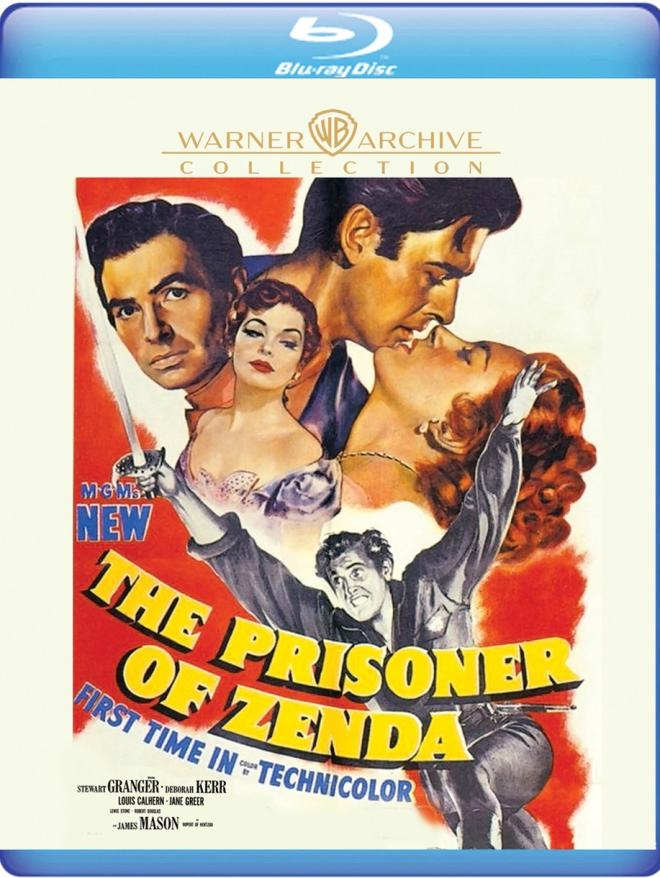
The Prisoner of Zenda (1952) - Warner Archive Collection
The fourth remake of the perennially popular swashbuckling tale, the spirited 1952 version of The Prisoner of Zenda boasts a top-tier cast led by Stewart Granger, Deborah Kerr, and James Mason, but it's the Technicolor that grabs most of the attention. Warner Archive's scrumptious new transfer struck from a 4K scan of the original Technicolor camera negatives delights the eye from beginning to end and makes this lavish production truly irresistible. Highly Recommended.
Storyline: Our Reviewer's Take
If it ain't broke, don't fix it. That old adage definitely applies to The Prisoner of Zenda in general and the sumptuous 1952 remake in particular. Anthony Hope's immensely popular story of palace intrigue and skullduggery in the fictional realm of Ruritania has been filmed several times, beginning in 1913. Two more silent versions followed (the 1922 production is included as an extra on this disc) before what many regard as the definitive remake starring Ronald Colman premiered in 1937.
All was then quiet on the Zenda front until 1952 when MGM decided it was high time to tell the tale again, but instead of fashioning a fresh take on the material, the studio chose instead to duplicate the 1937 version almost shot for shot. The big difference would be the addition of Technicolor, and what a game changer that decision turned out to be! Though it's hard to suppress the palpable feelings of déjà vu while watching the 1952 edition of The Prisoner of Zenda, the Technicolor is so glorious and the lush hues enhance the pomp and pageantry to such a lofty degree this remake almost feels brand new.
Almost. If imitation is the sincerest form of flattery, then this version of The Prisoner of Zenda just might rank as the biggest fawn job in Hollywood history, but it's so entertaining, who cares? I must admit I anticipated a stuffy, dull remake willing to rely on Technicolor and all its trimmings to compensate for its inferiority, but what I got was anything but. A glittering cast, an exciting climactic sword fight, and the story's inherent strength all contribute to the movie's success.
Stewart Granger is no Ronald Colman, but he's extremely good in the dual role of King Rudolf V of Ruritania and his distant, doppelgänger British cousin Rudolf Rassendyll. The commoner Rudolf just happens to arrive in Ruritania for a fishing trip the day before the king-to-be's coronation and his striking resemblance to His Royal Highness leaves everyone he meets dumbstruck. And that includes the future king, who's introduced to Rassendyll by two of his guards, Colonel Zapt (Louis Calhern) and Captain Fritz von Tarlenheim (Robert Coote).
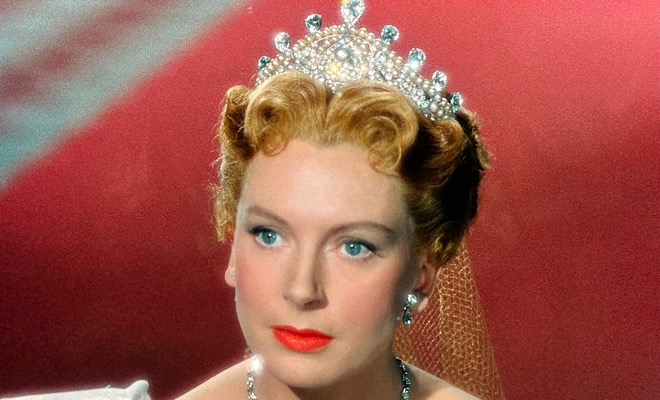
The two Rudolfs couldn't be more different. The blue blood is pompous, arrogant, irresponsible, and cares little for the country he is about to rule. His cousin is affable, sincere, patriotic (he just finished a stint in the Queen of England's service) and seems to adhere to a strict set of morals. At the palace that night, both men get drunk, but Rudolf of Ruritania, against the wishes of his advisors, caps off the evening by drinking a special bottle of wine given to him by his jealous, vindictive half-brother, Duke Michael of Strelsau (Robert Douglas). After a few sips, Rudolf passes out and when he can't be revived the next morning, Col. Zapt and Capt. Fritz deduces he's been seriously drugged.
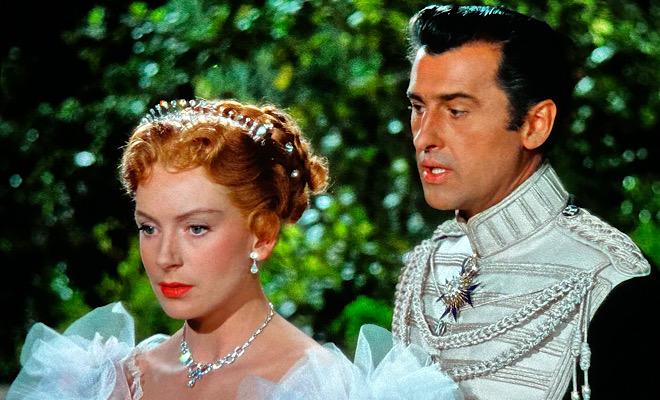
Both men panic, because if Rudolf doesn't show up at his coronation, Duke Michael will deem him unfit to serve and seize control of the throne. To foil Michael's plot, they implore Rassendyll to shave off his mustache, touch up his graying temples, and assume the king's identity during the coronation. Once the rightful Rudolf recovers, he will take back the crown, but in the meantime, Rassendyll must also fool Rudolf's fiancée, Princess Flavia (Deborah Kerr), who Rudolf hasn't seen in years and who doesn't hold her future husband in very high regard. Rassendyll reluctantly agrees to the masquerade, but when Rudolf is abducted by Michael's partner in crime, Rupert of Hentzau (James Mason), and becomes a prisoner in the county of Zenda, the phony King Rudolf is forced to continue his bogus reign. And it soon becomes clear he's better suited to the job than his incapacitated cousin.
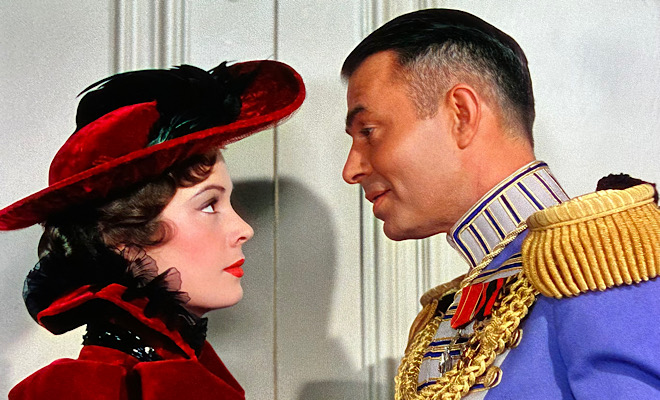
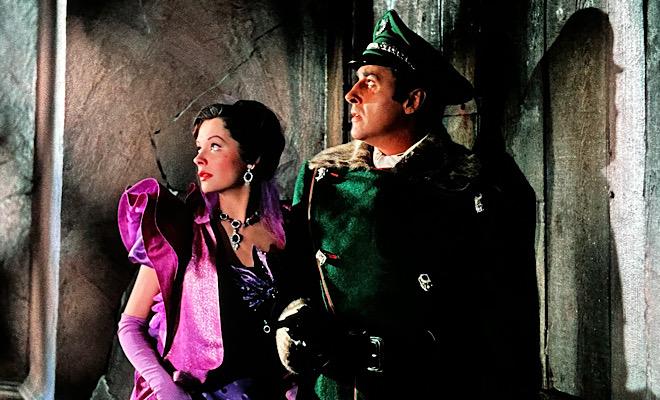
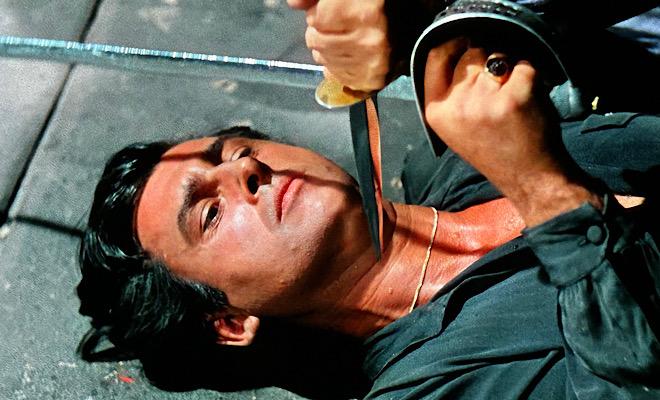
Awash with characters as colorful as the Technicolor photography, The Prisoner of Zenda is a complete crowd pleaser that almost demands popcorn to be fully enjoyed. The far-fetched narrative somehow works, and not long after the film begins, you get the feeling maybe MGM was right not to monkey with such a finely oiled machine after all. The 1937 screenplay by John L. Balderston, who cut his teeth on such classic horror fare as Dracula, Frankenstein, and The Mummy, remains largely intact (Wizard of Oz co-writer Noel Langley also receives credit), as does the original Alfred Newman music score (with embellishments by master arranger Conrad Salinger). The hefty budget enabled art director Cedric Gibbons to go wild with ornate sets and costume designer Walter Plunkett to fashion an array of elegant gowns and garish military uniforms. (Seeing Mason dressed like an Easter egg in an all-lavender uniform is a highlight.) Of course, the swashbuckling showdown is the picture's most memorable scene, and it's performed with vigor by Granger and Mason.
All the acting is first-rate, with much of the dialogue delivered with tongues firmly in cheek, but Mason is the standout. Lacing his lines with venomous glee and a thinly veiled note of disdain, he's an absolute delight as the rakish villain we love to hate. Kerr is photographed beautifully and her soft-spoken sincerity contrasts nicely with Granger's swagger. The two enjoy a comfortable rapport, but Kerr's talent far exceeds the limits of her largely decorative role. As the bitter, devious Michael, Douglas clenches his teeth throughout; Calhern and Coote play Rudolf's aides with a playful seriousness that strikes just the right tone; and Jane Greer shines in a too-brief yet pivotal part as the elegant, sophisticated Antoinette de Mauban, who loves Michael but doesn't approve of his Machiavellian maneuvers.
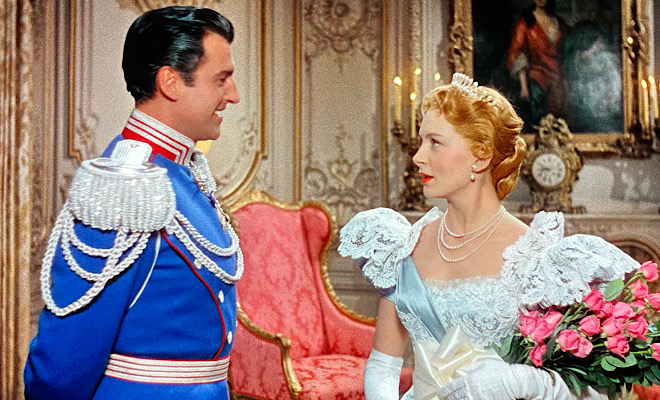
It's too bad the 1937 version of The Prisoner of Zenda has not yet seen a Blu-ray release, because it would be fun to screen these two versions that are as close to being twins as the two Rudolfs back to back. The earlier take would surely come out on top, but don't dismiss this formidable 1952 pretender to its throne. Like Rupert of Hentzau, it won't win the duel, but it puts up a damn good - and very entertaining - fight.

Vital Disc Stats: The Blu-ray
The 1952 version of The Prisoner of Zenda arrives on Blu-ray packaged in a standard case. Video codec is 1080p/AVC MPEG-4 and audio is DTS-HD Master Audio 2.0 mono. Once the disc is inserted into the player, the static menu without music immediately pops up; no previews or promos precede it.
Video Review
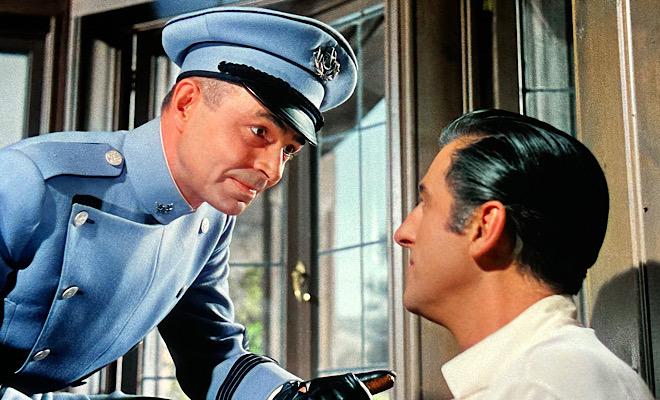
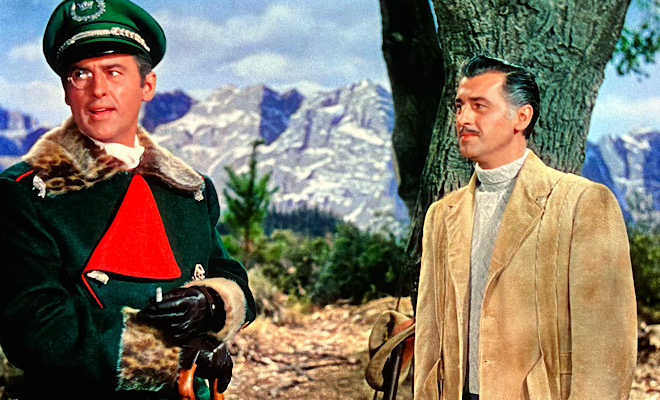
Wow. Nobody produces Technicolor transfers like Warner Archive and I've lavished heavy praise on them for years, but The Prisoner of Zenda has to be one of their finest efforts. A new HD master struck from a 4K scan of the original Technicolor camera negatives yields a breathtaking 1080p/AVC MPEG-4 transfer that celebrates the sumptuous beauty of the bygone format. Grain lovers will appreciate the palpable film-like feel of this exceptional rendering that never compromises the integrity of four-time Oscar winner Joseph Ruttenberg's cinematography. Excellent clarity and contrast produce a lush, vibrant image that brims with detail and depth. (The picture is so clear you can easily make out the faces of the stunt doubles for Granger and Mason during portions of their sword fight.) The textures of fabrics, sparkling jewels, and ornate medals are remarkably crisp, inky blacks grab attention, and the bright whites never bloom.
The color, though, is the star of this show. Red velvet, red lipstick, and the Cardinal's red robes all pop, but the deep blues in the military uniforms, splashes of yellow upholstery, verdant green landscapes, and every pastel on the palette are exquisitely rich and bold. There's so much to look at and admire in the frame it's sometimes difficult to concentrate on the narrative. Matte paintings are well integrated, the special effects allowing two Stewart Grangers to share the screen are seamless, and razor sharp close-ups zero in on water droplets, facial hair, wrinkles, Greer's impeccable bone structure, and Kerr's peaches-and-cream complexion. Flesh tones are spot on and not a single nick, scratch, or speck of dirt sullies the pristine print. I don't own the 2007 DVD, but any inkling that it could remotely outclass this exceptional Blu-ray presentation will be quickly quashed the moment you lay eyes on the first scene. An upgrade is essential.
Audio Review
The DTS-HD Master Audio 2.0 mono track supplies robust sound that thrusts us into the action. Superior fidelity and tonal depth heighten the impact of Alfred Newman's majestic score, adapted by the too often unheralded Conrad Salinger, and all the dialogue is well prioritized and comprehendible. (Mason's impeccable diction ensures we don't miss a single word from him.) Sonic accents like church bells, clanking swords, facial slaps, and shattering glass are distinct and no age-related hiss, pops, or crackle intrude. It's easy to dismiss the audio when the visuals are so dazzling, but this track delivers the goods, especially in the music department.
Special Features
A few choice supplements enhance the disc.
- 1922 Silent Version of The Prisoner of Zenda (SD, 113 minutes) - Directed by Rex Ingram and starring Lewis Stone 30 years before he would play the Cardinal in the 1952 remake, this impressive - and lengthy - take on the oft-told tale also contains a star-making performance by a young Ramon Novarro as the dastardly Rupert. Unbelievably, this was already the third filmed version of Anthony Hope's novel.
- Vintage Radio Adaptation: Lux Radio Theater (59 minutes) - Ronald Colman, Douglas Fairbanks, Jr., and C. Aubrey Smith recreate their roles in the 1937 version of The Prisoner of Zenda in this radio adaptation that aired on June 5, 1939. Colman's wife, Benita Hume, portrays Princess Flavia and producer-director Cecil B. DeMille hosts the broadcast.
- Vintage Radio Adaptation: Screen Director's Playhouse (30 minutes) - Ten years later, Colman recreated his role once again for this highly truncated adaptation broadcast on February 20, 1949. Hume joins him this time, too, as Flavia. John Cromwell, the director of the 1937 version, introduces and provides narration for the production. Some fun scripted banter closes out the broadcast.
- Theatrical Trailer (SD, 4 minutes) - The film's original preview completes the extras package.
Final Thoughts
Some may prefer the 1937 version with Ronald Colman, but the allure of Technicolor makes a strong case for this very entertaining 1952 redo. Granger, Kerr, Mason, and a fine supporting cast inject plenty of spirit into the time-honored tale and MGM doesn't skimp on pageantry and spectacle. Warner Archive's eye-popping five-star transfer that's struck from a new 4K scan of the original Technicolor negatives, remastered audio, two radio adaptations (both with Ronald Colman), and the 1922 silent version ensure this edition of The Prisoner of Zenda has something for everyone and will be enjoyed over and over again. Highly Recommended.
-
 Grab The Glasses - The Turbine Collector Series Grows with Three More Blu-Ray 3D Discs!By:
 -
 Closing Out 2024 and Welcoming 2025 - HDD's 4K UHD & Blu-ray Shopping Guide, Week of Dec. 31, 2024By:
 -
 Holiday Greetings - HDD's 4K UHD & Blu-ray Shopping Guide, Weeks of Dec. 17 & Dec. 24, 2024By:
 -
 Santa Comes Early This Year! Turbine Delivering 'Bumblebee' 'Transformers: Rise of the Beasts' & 'Sing 2' to 3D Blu-ray on December 19thBy: