I Used To Be Funny
Blu-ray Review By: Bryan Kluger
I Used To Be Funny has the facade of a comedic film, however, as the movie plays, there is something much more tragic and depressing going on underneath the main character's skin and mind as she tries to perform stand-up comedy. The 1080p HD video transfer looks great and the DTS-HD 5.1 audio sounds wonderful. The bonus features are quaint and only feature the director but are worth the time. Recommended! 

Storyline: Our Reviewer's Take
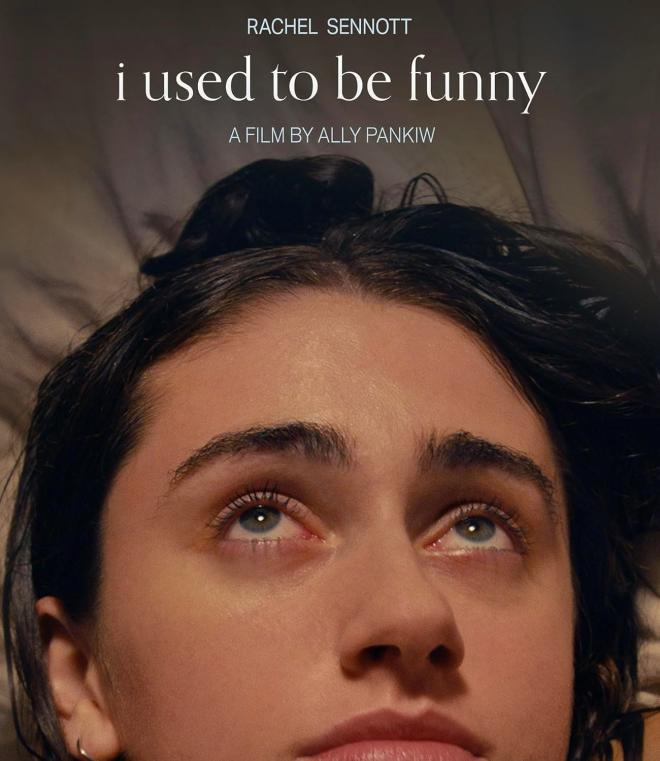
In Ally Pankiw's I Used to Be Funny, the intersection of comedy and mental health becomes both a source of levity and a biting reflection on trauma, grief, and depression. The film's narrative, grounded in the struggles of a young comedian’s unraveling life, echoes the indie sensibilities of The Big Sick and Obvious Child but takes a more complex, fractured approach to its storytelling. Its protagonist, Sam (Rachel Sennott), an aspiring comedian whose career is stalling, finds herself paralyzed by a series of external crises; a trauma she can barely begin to process. As she retreats from everything and everyone, the film slowly unravels the events that led her to this place, piecing together a fragmented portrait of a woman whose seemingly endless anxiety has, quite literally, immobilized her.
Sennott, best known for her standout role in Shiva Baby, is masterful as Sam, a character who hides her despair beneath a veneer of sharp, self-deprecating humor. Her performance deftly balances the humor and pathos inherent in the role, capturing the dissonance of a young woman who can make others laugh while crumbling inside. Sam’s retreat from the world, compounded by a rift with her former child she was nannying, Brooke (Olga Petsa), is gradually revealed through a non-linear narrative that keeps the audience on edge, even if it occasionally teeters into frustrating ambiguity. This fragmented approach works at times, especially in building suspense, but can also obscure the film’s emotional core for stretches.
At the heart of the film is Sam’s unraveling relationship with Brooke, a 14-year-old girl dealing with her tumultuous grief after the death of her mother. Their dynamic, which begins with a light, big-sister energy, takes on much darker undertones, and Pankiw reveals this shift in a way that is at once unsettling and restrained. While the ultimate cause of Sam’s breakdown remains partially veiled until the final act, the film’s gradual reveal of trauma through a courtroom sequence adds a necessary punch. Pankiw avoids gratuitousness, leaving the specifics to the imagination, but the emotional weight of the scene is undeniable. The film’s unconventional structure does sometimes work against it, with its piecemeal chronology withholding too much for too long. Still, I Used to Be Funny earns its cathartic ending, delivering a potent blend of dark humor and emotional clarity in its final moments. The movie's final resolution, a quieter and more hopeful turn, feels earned, though slightly rushed, given the complex terrain it has covered. That said, the film succeeds in bringing together disparate tonal and thematic elements—grief, sexual assault, and the existential crises of young adulthood; with the kind of sharp wit and deeply human insight that makes it feel both timely and timeless.
Pankiw’s assured direction and visual craftsmanship lift I Used to Be Funny above the typical indie comedy-drama fare. Despite a soundtrack that occasionally leans too heavily on generic pop, the film’s subtle design and well-executed pacing make it feel like a refined debut. Petsa, as Brooke, offers a standout performance as a bright but increasingly troubled teen, while Sennott, as always, is a perfect fit for a character who uses humor as both armor and weapon. Ultimately, I Used to Be Funny pulls off a delicate balance between humor and grief, successfully making light of the darkest moments without diminishing their emotional gravity. It’s a smart, ambitious first feature from Pankiw that speaks to the generational zeitgeist of mental health struggles and the messiness of growing up, wrapped in a package of pitch-perfect, dyspeptic humor.
Vital Disc Stats: The Blu-ray
I Used To Be Funny jokes its way to Blu-ray via Utopia and OCN Distribution. The sole disc is housed inside a hard, clear plastic case. There is an 18-page booklet about the film inside. The double-sided artwork features a couple of cool images. One is of the original movie poster with Rachel Sennott looking up. The reverse side is an image of the two main women of the film looking over Niagra Falls.
Video Review
I Used to Be Funny arrives on Blu-ray in a stellar 1080p presentation that does justice to the film's nuanced visual style. While there is an added vibrancy in some of the flashback sequences, particularly during the on-stage scenes, the film predominantly inhabits a more reserved, internal world that mirrors Sam’s emotional withdrawal after trauma. The transfer captures every environment with care, from intimate interiors to more expansive flashbacks, showcasing textures in clothing, makeup, and production design that add significant depth. Skin tones are natural and finely detailed, while highlights are crisp, with no issues of blooming. The blacks are deep and rich, avoiding any noticeable crush or compression artifacts. Utopia has done an excellent job with this release, preserving the subtle beauty of the film’s cinematography and enhancing the viewer’s experience at home.
Audio Review
This release boasts an excellent DTS-HD 5.1 Master Audio track that delivers the film's soundscape with precision and clarity. Dialogue is crisp and clear throughout, never overshadowed by competing noises. Environmental soundscapes, whether urban or suburban, enrich the atmosphere, making the world feel lived-in and immersive. Music is used effectively, saturating the room to enhance the emotional weight of key moments, while the low end adds texture where needed. The noises at Niagra Falls bring in the low end of the bass with a good rumble too. The sound design is subtle but highly effective, with carefully placed sounds, such as audience laughter, perfectly integrated into the mix. This is a solid DTS-HD 5.1 audio track.
Special Features
There are about 23 minutes of extras, mostly with just the director. There is also a commentary track and an 18-page booklet about the film.
- Audio Commentary with Director Ally Pankiw and Script Supervisor Paula Wilson
- Q&A with Ally Pankiw
- Image Gallery
- Trailer
- 18-Page Booklet
Rachel Sennott and Ally Pankiw really balance that fine line of tragic drama and comedy to a high temperature that boils over into some taboo territory that is reminiscent of the film Hardcore in their own movie I Used To Be Funny. It has emotional performances and some good, dark laughs. The 1080p HD video looks great and the DTS-HD 5.1 audio mix sounds wonderful. The director is the only one involved in the extras but is worth the time. Recommended!
-
 Grab The Glasses - The Turbine Collector Series Grows with Three More Blu-Ray 3D Discs!By:
 -
 Closing Out 2024 and Welcoming 2025 - HDD's 4K UHD & Blu-ray Shopping Guide, Week of Dec. 31, 2024By:
 -
 Holiday Greetings - HDD's 4K UHD & Blu-ray Shopping Guide, Weeks of Dec. 17 & Dec. 24, 2024By:
 -
 Santa Comes Early This Year! Turbine Delivering 'Bumblebee' 'Transformers: Rise of the Beasts' & 'Sing 2' to 3D Blu-ray on December 19thBy: