Cry, the Beloved Country
Blu-ray Review By: Matthew Hartman
Zoltan Korda’s blisteringly emotional adaptation of Alan Paton’s novel Cry, the Beloved Country starring Canada Lee, Sidney Poitier, and Charles Carson comes home to Blu-ray from Kino Lorber Studio Classics. This drama of two families joined by tragedy is an invigorating character study of class, race, and justice. KLSC offers up the same excellent A/V presentation that StudioCanal offered for other U.K. Blu-ray. Unfortunately, bonus features aren't as robust but this edition gains its own commentary track. If you didn't import it, this is a great disc for a terrific film. Highly Recommended
Storyline: Our Reviewer's Take
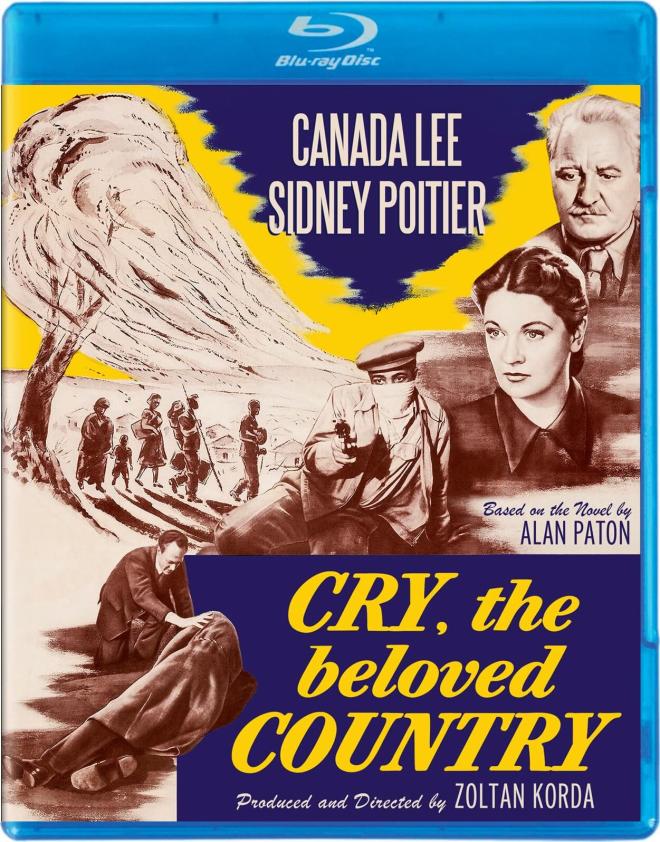
As I reviewed Cry, the Beloved Country barely 18 months ago, I don't have anything to add to my thoughts of the film. I'll have gone through this feature about four times now in that period, and it remains a fascinating piece of work. It's still fascinating that such an incendiary story could be made on location in apartheid-era South Africa under such stealthy conditions. It's a hell of a film that deserves to be seen. Here's what I thought about the film back in 2023.
Some stories are distinctly of their time and place. They can only exist when and where they are told. That box can be a pretty tight fit, but the story can’t ever really exist outside of it. Then you have works like Alan Paton’s Cry, the Beloved Country. Shot during the height of Apartheid, the film's themes about race relations, crime, and the painful aftermath of tragedy resonate globally. Zoltan Korda deserves a massive amount of credit for taking this dense piece of work and crafting a tremendous motion picture while stealthily shooting it in the heart of Johannesburg.
Father Stephen Kumalo (Canada Lee) tends to his flock of poor farmers and workers far away from the glamor of Johannesburg. Wealthy white landowner James Jarvis is content to disagree with his son’s progressive views and efforts in the city. Both men live side by side, but they are not neighbors. They are not friends. They never share a meal or even a word together. But both men will have to travel to Johannesburg to face a tragedy that will forever link their two families.
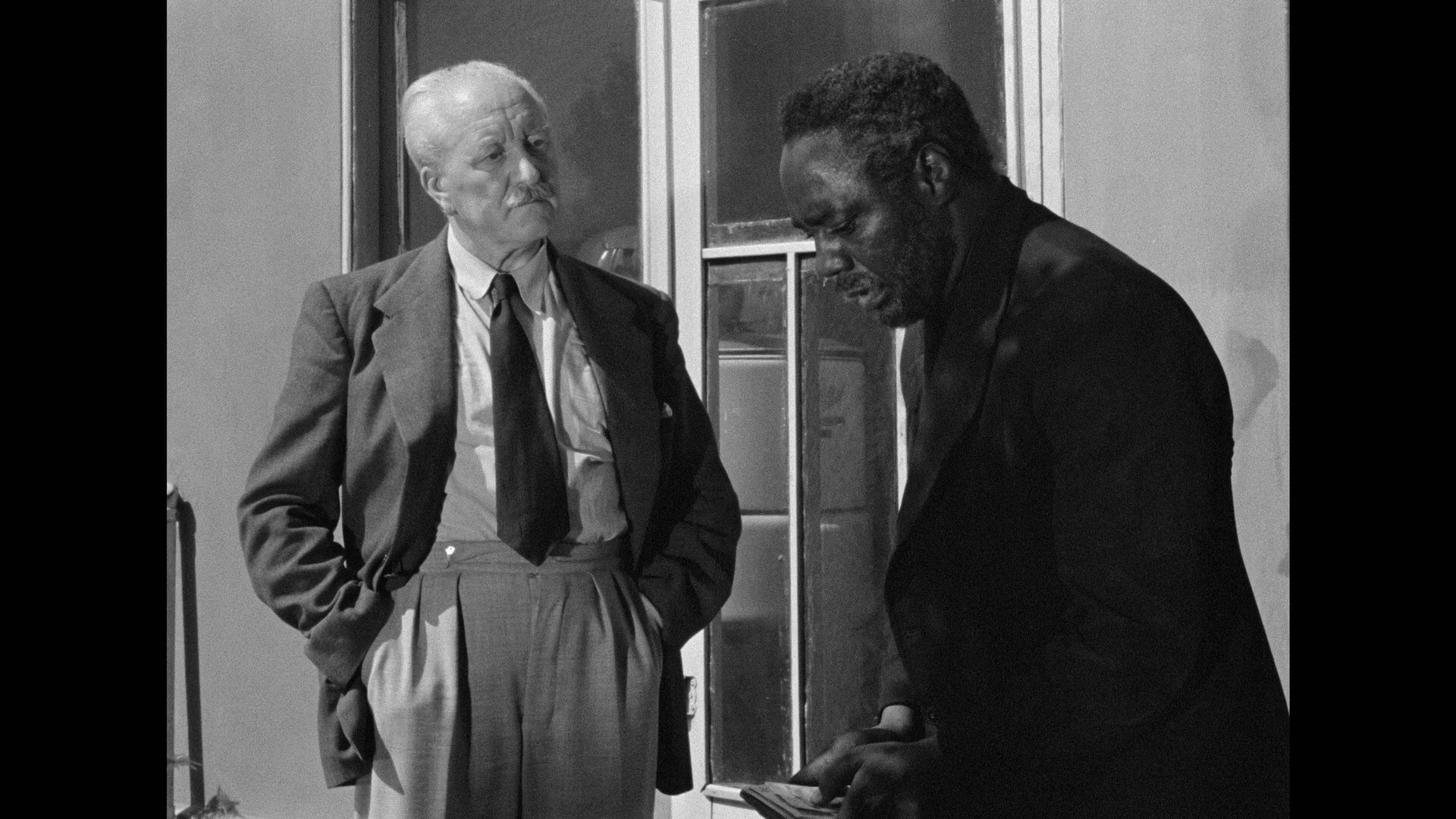
My first introduction to Cry the Beloved Country came sometime in the early summer of 2006. I was working to complete my undergrad, and for summer school I took a class in adaptation screenwriting. While an adaptive writing assignment was a key part of the class, we also would read various novels and would then watch and analyze their film counterparts. One of the works we looked at was Alan Paton’s 1948 novel and Zoltan Korda’s 1951 adaptation. At a little over 270 pages (depending on print edition), the novel isn’t exactly long or unwieldy, but it’s a dense story as it traverses a range of issues affecting the people of South Africa pre-Apartheid while also weaving a compelling, interesting, character-focused story. Not an impossible story to adapt but a difficult one to do well and Zoltan Korda did a pretty damned fantastic job considering the number of laws passed in the years after the novel's publication. (I have not seen the 1995 version with Richard Harris and James Earl Jones, but I’ve heard it’s pretty good.)
While interiors were shot in the U.K., a number of exterior and location shoots were done throughout South Africa and in the heart of Johannesburg. Shooting a major motion picture with international and politically active stars like Canada Lee and Sidney Poitier wasn’t easy. In fact, it required a measure of subterfuge. To get past the strict South African immigration authorities, Lee and Poitier actually had to pose as Korda’s indentured servants. Once the film was finished, this ruse caused such a stir that apparently Canada Lee was called before the HUAC committee to explain his actions but sadly passed away before he could do so.
Aiding Korda with the task of adapting the novel, the film’s screenplay was written by John Howard Lawson. Lawson was famous for penning such war-time hits as Bogart’s two 1943 action thrillers Sahara and Action in the North Atlantic. He also previously worked with Korda on 1945’s potboiler Counter Attack, starring Paul Muni. And for his efforts in penning thrilling blockbuster wartime screenplays, Lawson was accused of being a communist, became one of the infamous “Hollywood 10” and was subsequently blacklisted from working under his own name in Hollywood. His work on this picture went uncredited for decades.
For my take, it’s simply an emotionally-wrenching film, but also a beautifully hopeful one. As the plot progresses and the lives of Kumalo and Jarvis become intertwined in a tragic murder, these two form an unexpected bond. Like the novel, in another part of the world and in a different time and in better circumstances their characters could have been friends. They have more in common than they’d otherwise believe and come to see eye-to-eye on issues they otherwise wouldn’t have. Peace and understanding through civil conversation and empathy is a common thread found in both works. Paton was pretty damn bold for writing what was essentially an anti-Apartheid civil rights novel before the laws of South Africa's National Party took effect. Korda was equally bold for going into the belly of the beast to make a film about that story. Not only is it an affecting character drama, but it’s also an ambitious piece of work.
Vital Disc Stats: The Blu-ray
Now it's Kino Lorber Studio Classics turn to deliver Cry, the Beloved Country to Blu-ray. A single disc edition, the film is pressed on a Region A BD50 disc and housed in a standard case. No slipcover for this one. The disc loads to a static image main menu with basic navigation options.
Video Review
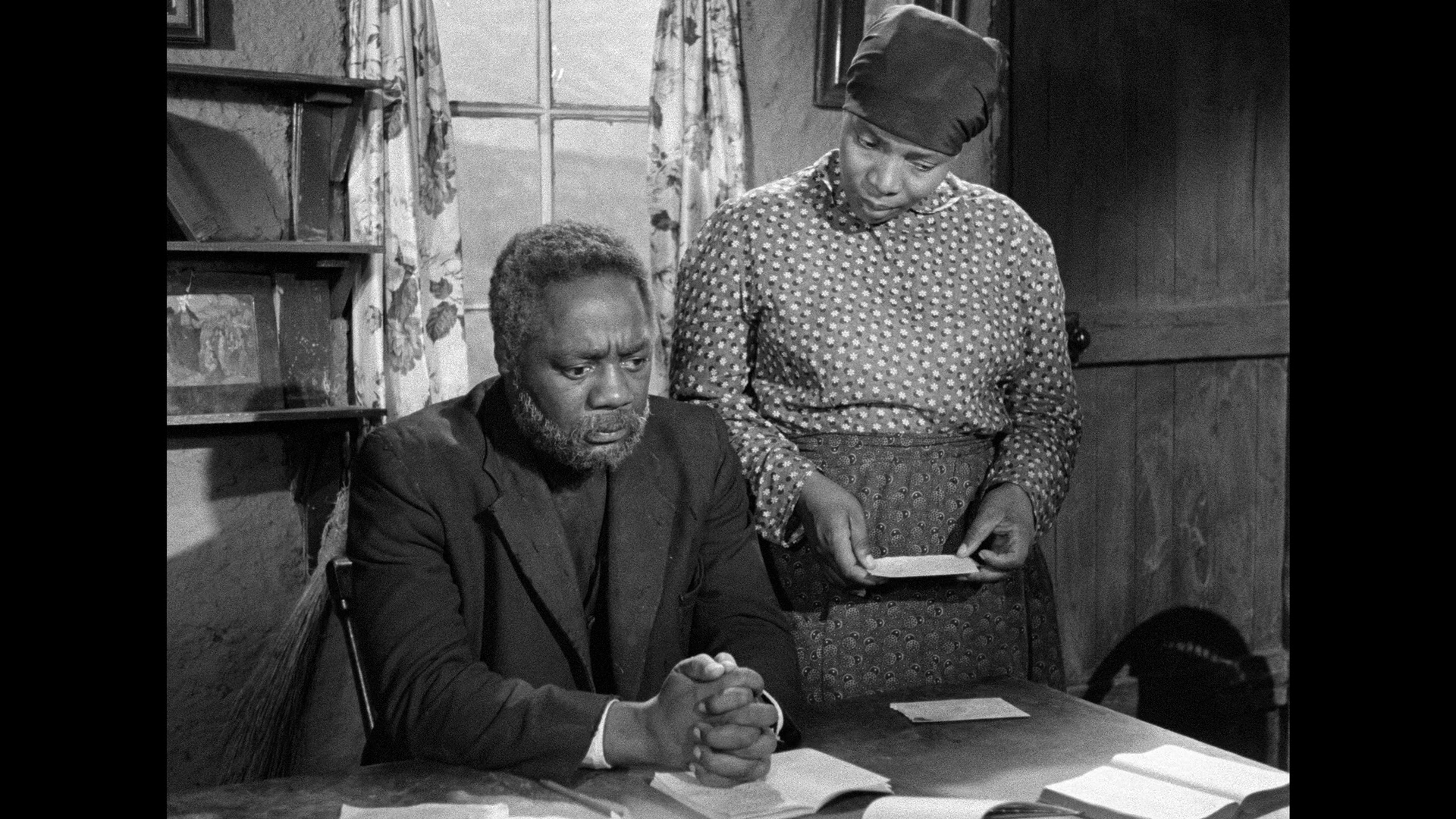
With KLSC essentially licensing the same transfer from StudioCanal, there's virtually no difference between the two discs. Flipping between the releases I couldn't spot any kind of discrepancies. Even the bitrates for both are very similar. So if you imported the previous release, there's really nothing here worth jumping on for a second round. Likewise, if you didn't import this film, you're getting a terrific transfer. Here's what I had to say back in 2023:
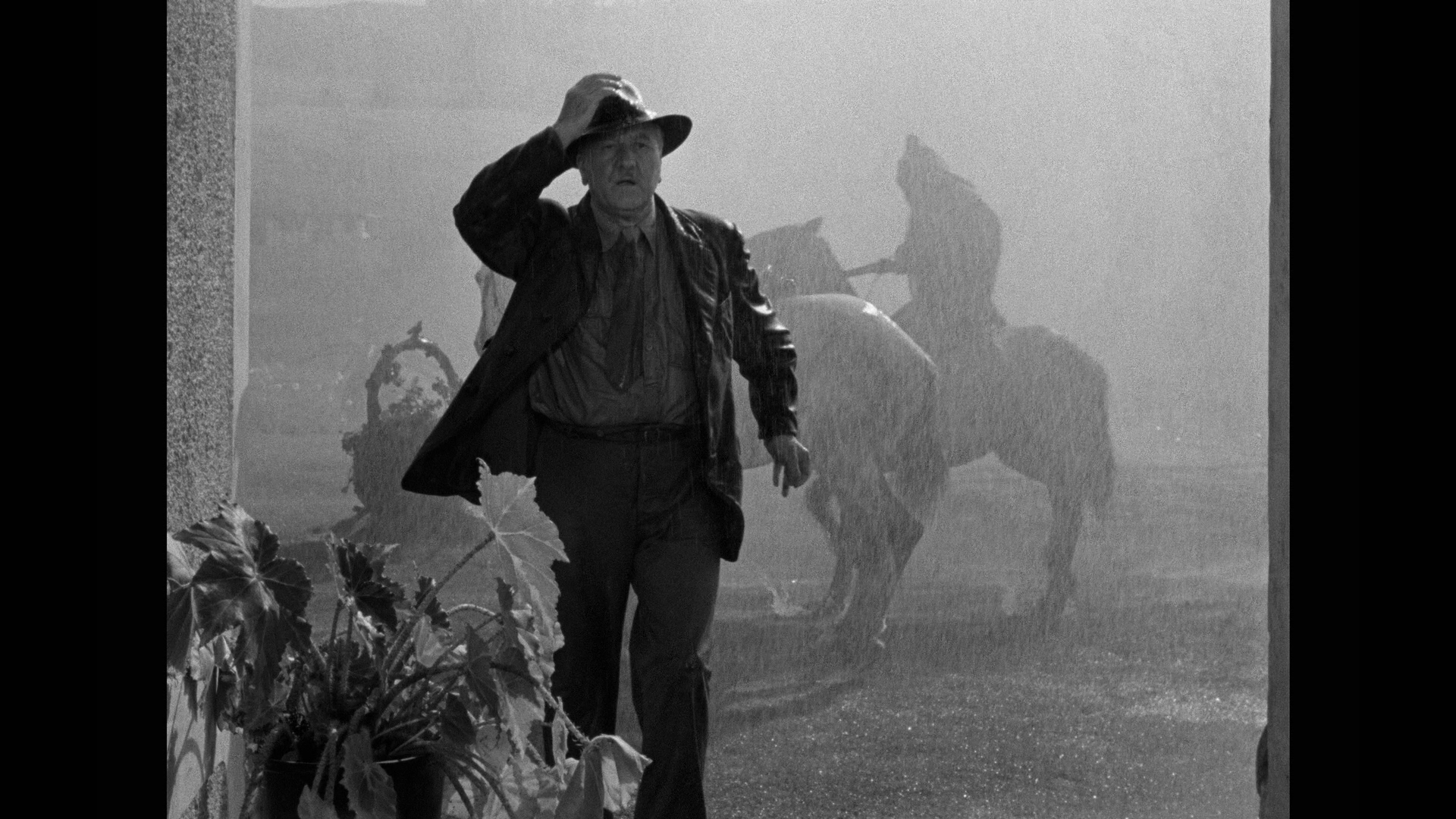
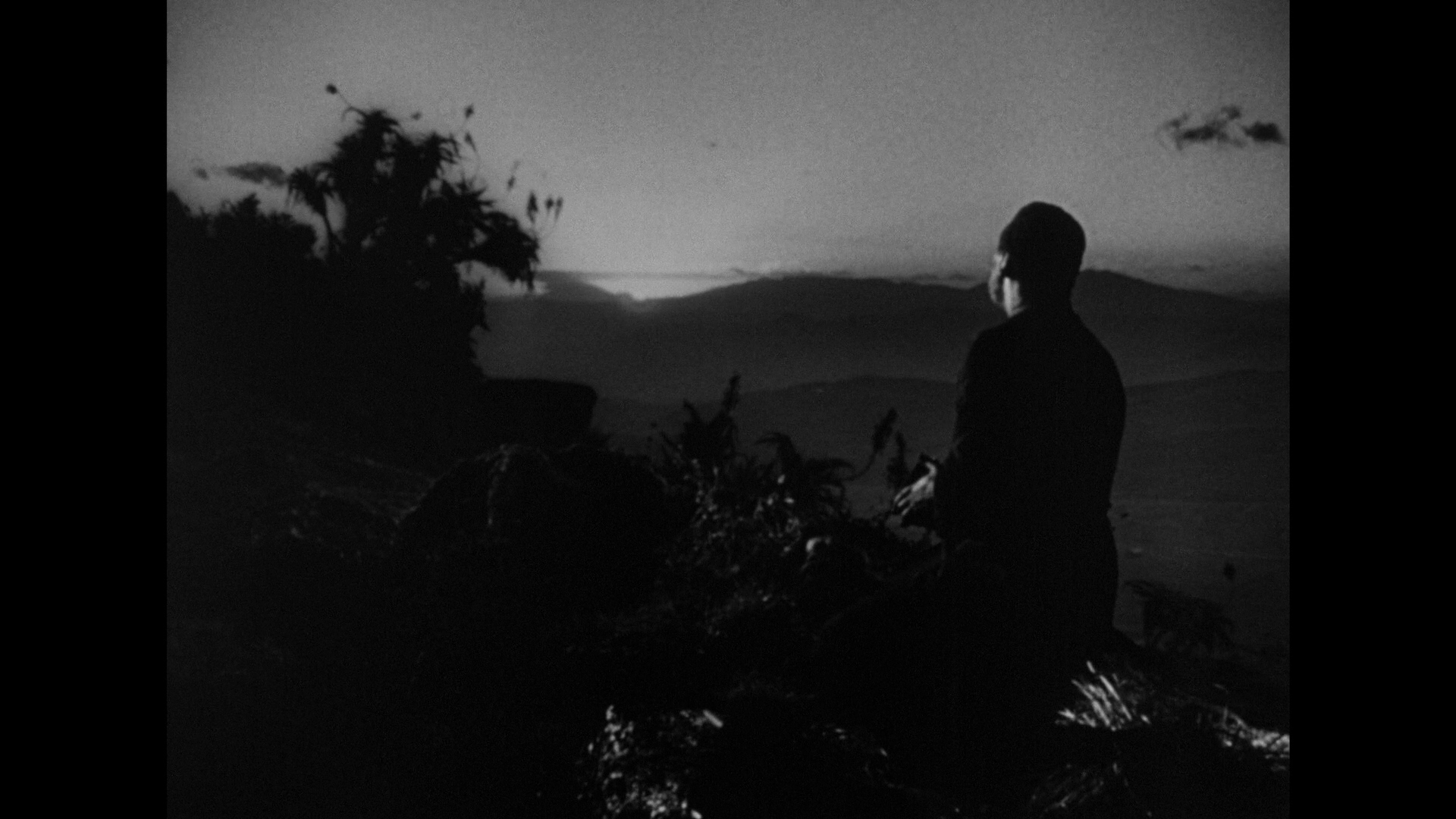
After reportedly receiving a 4K restoration, Cry The Beloved Country the film simply looks fantastic. The last time I saw this was on a DVD in my class (that may have actually been a VHS rip). So I’m 20 years removed, but the difference is immediate - which shouldn’t be surprising. Shot by Robert Krasker (who won the Oscar for The Third Man), the film’s black-and-white photography is gorgeous! From the scenic hills and fields of provincial South Africa to the bustling squalidness of the Johannesburg slums, shots are intricately captured, showing the natural beauty of the region but never shying from some pretty horrible conditions. Details are crisp and clean with nice, fine lines and a healthy cinematic grain structure. The grayscale is also excellent, showcasing bright crisp whites, deep inky blacks, and the range of grays in between. There are a few small patches of speckling, maybe a scratch or two, but nothing severe or distracting. There are a few standout shots where the background is obviously rear-projected, but there’s nothing that can be done about that. I’d be damned curious to see a 4K HDR release of this but if that’s not possible, this disc will do beautifully.
Audio Review
Similar to the video transfer, KLSC more or less offers up the same audio experience only with a different encode. The StudioCanal disc was an LPCM 2.0 track, this Kino disc is a DTS-HD MA 2.0 track. Flipping between them they sound virtually identical. I couldn't pick up on any perceptible differences in clarity. So my previous thoughts about the StudioCanal version hold (albeit with the caveat of format).
On the audio side, this release comes with a lovely and effective LPCM 2.0 audio track. Being a very character-focused film, dialog maintains center stage throughout. The street scenes, trains, and the climax in the courthouse are nicely staged sections with more hustle and bustle. Scoring may be a bit minimal at times but it accents the film nicely. There is some slight hiss is present throughout but not horribly distracting. Occasionally it can lead to some slight sibilance in the dialog but again nothing distracting.
Special Features
Where I found this release somewhat lacking was in the bonus features. While the StudioCanal disc wasn't an expansive plethera of exciting new content, it did have a nice wealth of new interviews with archival documentaries to showcase. Most of those aren't available here. What does return is the insightful interview with Mona Z. Smith. Unique to this release is a very insightful audio commentary from film historian Daniel Kremer. After that, it's KLSC's standard stable of trailers. So this disc isn't quite a wiff on the extra content; there's just more really great material out there that evidently didn't carry over between license agreements.
- Audio Commentary featuring KDaniel Kremer
- Canada Lee, An Interview with Mona Z. Smith (HD 35:51)
- KLSC Trailer Gallery
- Lilies of the Field
- Anna Lucasta
- Cry Freedom
- Lost in the Stars
- A Woman's Vengeance
Thanks to Kino Lorber Studio Classics, this amazing film can be picked up here in the States without having to be imported. Cry, the Beloved Country isn’t an easy film, but it’s also a wonderful film. There are tragic events, but the film doesn’t wallow in foreboding sadness as a measure of finding the meaning of life. The film is in fact a hopeful one. With great heart, it works to find the common humanity between two very different people. Canada Lee is the main focus of the film and dominates every scene. Sidney Poitier was still an up-and-coming actor at this point, but in his few commanding moments, you see the movie star he’ll soon become. As for Charles Carson, I think the only other film I’d seen him in was the silly Curse of the Fly, but he gives a lovely, heartfelt turn here. Zoltan Korda pulled off the impossible of shooting a film like this in the middle of Johannesburg crafting a lovely human story in the process. KLSC offers up the same terrific video transfer as the StudioCanal disc with a DTS-HD MA 2.0 track that effectively offers the same auditory experience as that release. The most notable difference here is the bonus features package. This one offers a very interesting, worthwhile audio commentary and the same new interview material, but it sadly misses out on some of the excellent documentaries that the StudioCanal disc offered. That's the only little asterisk I'd attach to this otherwise great disc for a terrific film. Still going to call this one Highly Recommended.
-
 Grab The Glasses - The Turbine Collector Series Grows with Three More Blu-Ray 3D Discs!By:
 -
 Closing Out 2024 and Welcoming 2025 - HDD's 4K UHD & Blu-ray Shopping Guide, Week of Dec. 31, 2024By:
 -
 Holiday Greetings - HDD's 4K UHD & Blu-ray Shopping Guide, Weeks of Dec. 17 & Dec. 24, 2024By:
 -
 Santa Comes Early This Year! Turbine Delivering 'Bumblebee' 'Transformers: Rise of the Beasts' & 'Sing 2' to 3D Blu-ray on December 19thBy: